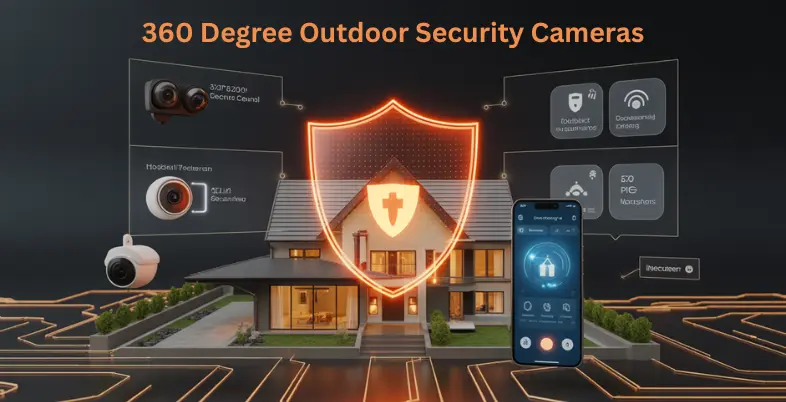
Home security is not a luxury but a necessity nowadays. Living in a fast-changing technological era, your property will be exposed to vulnerability owing to the presence of an obsolete, inflexible security camera that can only monitor one direction. Criminals have learned how to take advantage of the loopholes of conventional bullet or dome cameras. What about a thief going round the side door when you have your camera staring into your front yard? This is why protection is being changed by 360-degree outside security cameras. These cameras have motorized pan, tilt, and zoom (PTZ) capabilities and thus act like robotic guards, which actively track the movement across the entire premises.
Consumer behavior all over the world shows a clear need to have these advanced systems. One of the recent predictions has indicated that the worldwide market in smart home security cameras is projected to increase from USD 10.71 billion in 2024 but an astonishing USD 68.64 billion in 2035 (Spherical Insights). This rush is an indication of bitter residential security. Crime statistics also show that there is a higher chance of a home with no security being burglarized by 300 percent (Deep Sentinel). Attackers want to get access to the opportunities and a motorized camera that shows all the movements is the ultimate discouragement.
This comprehensive manual will be a discussion on 360-degree surveillance. We will discuss the key characteristics to consider, discuss the reasoning behind the technologies implemented in AI, and explore the 10 best 360 degree outdoor security cameras in 2026, spending in achieving blanking out your home.
What Is a 360 Degree Outdoor Security Cameras? (PTZ vs Fisheye)
A 360 degree outdoor security cameras is an advanced surveillance device designed to provide complete panoramic coverage of outdoor spaces without leaving blind spots. Unlike traditional cameras that capture only a limited angle, these cameras use fisheye lenses or multiple sensors to monitor an entire area in every direction.
They are commonly installed in homes, offices, parking lots, warehouses, and commercial properties to improve security and reduce the need for multiple cameras. Most modern 360 degree outdoor security cameras come with features like night vision, motion detection, weatherproof protection, two-way audio, cloud storage, and smartphone connectivity for real-time monitoring.
Their wide-angle coverage helps users track movement more effectively and enhances overall surveillance efficiency. These cameras are especially useful for large outdoor areas where continuous monitoring is important. By offering full-area visibility and smart security features, 360 degree outdoor security cameras provide a reliable and cost-effective solution for modern outdoor protection needs.
PTZ (Pan, Tilt, Zoom) Cameras
PTZ cameras contain mechanical motors that allow the camera to rotate horizontally, vertically, and zoom into specific points of interest. These cameras are designed for active surveillance and can be controlled remotely to follow movement or focus on important areas.
- Coverage: Can pan up to 355° and tilt up to 90°. They provide a full 360° view only by rotating to different directions over time.
- Strengths: Excellent for tracking people, vehicles, or suspicious activity. PTZ cameras offer powerful optical zoom, auto-tracking, and detailed close-up footage such as faces or license plates. They also work well as visible security deterrents.
- Best For: Large outdoor properties, parking lots, warehouses, stadiums, driveways, and construction sites.
Fisheye Cameras
Fisheye cameras use a single ultra-wide-angle lens to capture a panoramic 180° or 360° view all at once. Unlike PTZ cameras, fisheye cameras remain stationary and monitor the entire surrounding area continuously.
- Coverage: Captures the whole nearby area in a single frame without moving.
- Strengths: Eliminates blind spots completely and requires very little maintenance because there are no moving mechanical parts. They are durable, reliable, and ideal for broad-area monitoring.
- Best For: Open outdoor spaces, office entrances, building corners, retail stores, and T-junctions where full-area visibility is important.
Quick Comparison: PTZ vs Fisheye
| Feature | PTZ (Pan-Tilt-Zoom) | Fisheye |
|---|---|---|
| How it Works | Physically rotates and zooms into targets | Stays fixed and captures everything at once |
| Blind Spots | Yes, can only monitor one direction at a time | No, covers the full surrounding area |
| Zoom & Detail | High optical zoom for clear distant details | Wider coverage but lower edge detail |
| Monitoring Style | Best for active monitoring and tracking | Best for constant panoramic surveillance |
| Maintenance | Higher due to moving motors | Low because there are no mechanical parts |
| Best Use | Large properties and long-distance monitoring | Full-area coverage in compact spaces |
Key Features to Look for in a 360 Degree Outdoor Security Cameras
Before you buy, check these:
- Resolution – 4K gives you the clearest image. 2K is also great. Avoid anything below 1080p for outdoor use.
- Night Vision – Look for color night vision, not just black-and-white, especially in modern night vision security cameras. It makes a big difference.
- Motion Detection – AI-based detection (person, car, animal) cuts down on false alerts from passing headlights or blowing leaves.
- Power Source – Wired, battery, solar, or PoE. Each has pros and cons (more on this below).
- Storage - Local SD card, cloud, or both. Cloud costs money monthly; local is free after setup.
- Weather Rating – Look for IP65 or higher. This means it can handle rain, dust, and extreme temperatures.
- Two-Way Audio - Lets you speak through the camera. Useful for deliveries or telling strangers to back off.
- Auto-Tracking – Automatically follows moving objects. Great for active monitoring without constantly checking your phone.
List Of Top 10 360 Degree Outdoor Security Cameras
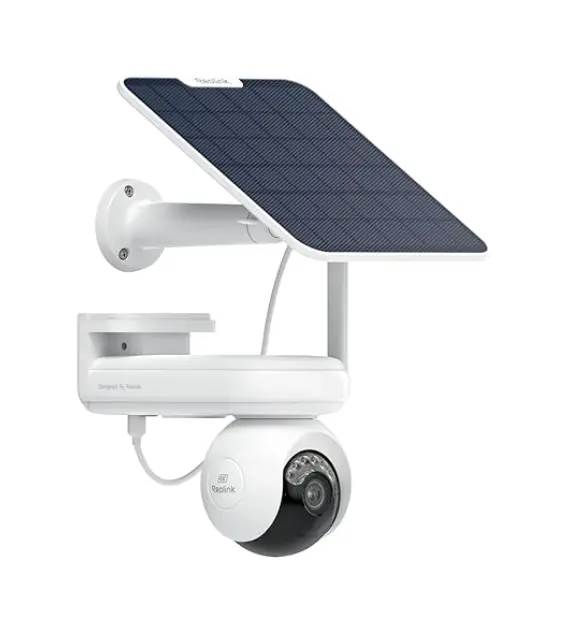
1. Reolink Atlas PT Ultra – Best Battery-Powered 4K PTZ Camera
$130 |reolink.com
The Reolink Atlas PT Ultra is one of the best choices for homeowners who want a powerful home security camera without dealing with messy wiring. This camera records in sharp 4K resolution, so faces, packages, and even license plates look clear from a distance. It comes with a rechargeable battery, making installation simple for beginners. The camera can pan 355° and tilt 140°, giving wide coverage around your property.
Reolink Atlas PT Ultra also includes color night vision, auto-tracking, and two-way audio, so you can monitor visitors or speak through the camera directly from your phone. It stores footage on an SD card or in the cloud. Overall, it’s a great pick for anyone looking for reliable outdoor protection with smart tracking features.
Key Features:
- 4K resolution
- Color night vision
- Auto-tracking
- Two-way audio
Pros:
- Easy wireless install
- Excellent image quality
- Long battery life
Cons:
- Battery drains faster in busy areas due to constant tracking
- Cloud storage requires a paid subscription
- App can feel slow when loading live footage
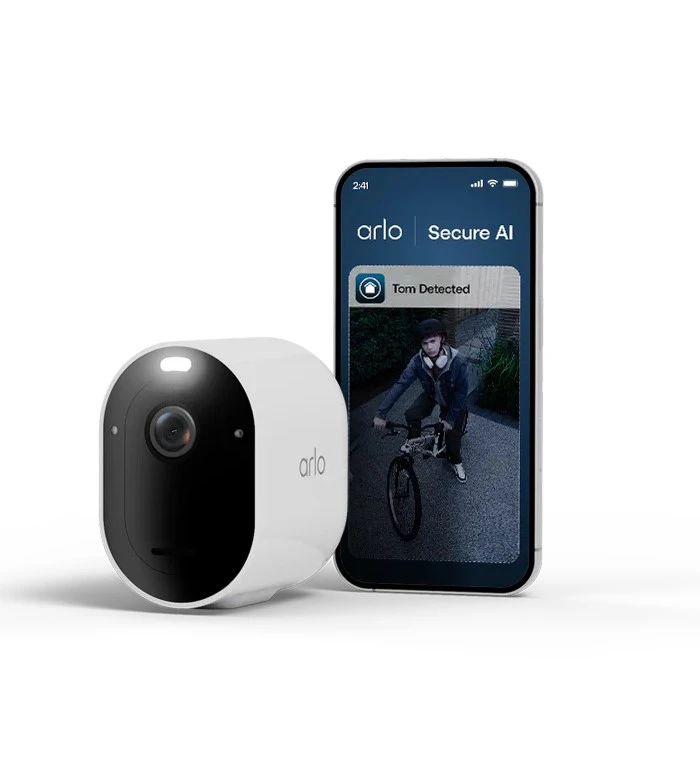
2. Arlo Pro 5S - Best Premium Wireless Camera
$200 |arlo.com
The Arlo Pro 5S is a premium wireless security camera designed for users who want a smooth and polished smart home experience in a trusted CCTV camera brand segment. It records in crisp 2K HDR quality and delivers excellent image clarity during both day and night. Since it connects directly to Wi-Fi, you don’t need an additional base station to get started.
Arlo Pro 5S supports color night vision, built-in sirens, and smart home integration with platforms like Apple Home and Google Home. It works on battery power and can also be paired with a solar panel for easier long-term use. The camera supports cloud storage and local USB storage options, although many advanced features require a subscription.
Key Features:
- HDR video
- Color night vision
- Built-in siren
- Smart home integration
Pros:
- Excellent app
- Weatherproof
- No hub needed
Cons:
- One of the pricier options on this list
- Full features locked behind a monthly subscription
- No pan or tilt – fixed angle only
3. Google Nest Cam (Floodlight) – Best for Google Home Users

$280 |store.google.com
The Google Nest Cam with Floodlight combines a smart security camera and a bright outdoor floodlight in a single device. It records in 1080p HDR quality and automatically activates the floodlights whenever motion is detected around your home. This makes it especially useful for driveways, garages, and front entrances.
Google Nest Cam works perfectly with Google Assistant and other Google smart home devices. It also offers facial recognition and stores a few hours of event history for free. Because the camera is hardwired, it provides stable power and reliable performance without worrying about battery charging.
Key Features:
- Built-in floodlight
- Google Assistant integration
- Facial recognition
Pros:
- Powerful lights
- Smart alerts
- Seamless Google integration
Cons:
- Requires professional wiring to install
- Ongoing subscription needed for full features
- Expensive compared to similar wired cameras
4. Ring Floodlight Cam Pro – Best for Amazon Users

$250 |ring.com
The Ring Floodlight Cam Pro is an excellent option for people already using Alexa or Amazon home security systems or smart home devices. It records in clear 1080p HDR quality and includes bright floodlights, two-way talk, and a loud built-in siren for added security.
One of the standout features of the Ring Floodlight Cam Pro is its advanced 3D motion detection system, which helps reduce false alerts by accurately mapping movement around your property. The camera uses wired power for consistent performance and stores recordings through Ring’s cloud subscription service.
Key Features:
- 3D motion detection
- Color night vision
- Two-way talk
- Built-in siren
Pros:
- Works great with Alexa
- Easy app
- Solid build quality
Cons:
- Cloud storage is subscription-only with no free tier
- Needs hardwiring – no wireless option
- Heavily tied to the Ring ecosystem
5. Eufy SoloCam S340 – Best Solar-Powered PTZ

$160 |eufylife.com
The Eufy SoloCam S340 is a smart solar-powered outdoor camera built for users who want low-maintenance security. Its built-in solar panel keeps the battery charged with just a few hours of sunlight each day, so you rarely need to think about charging it manually.
Eufy SoloCam S340 records in sharp 3K resolution and offers full 360° pan coverage with automatic motion tracking. It also includes local SD card storage, which means there are no monthly subscription fees. The camera works especially well for gardens, garages, backyards, and other outdoor areas where running power cables is difficult.
Key Features:
- Built-in solar panel
- Auto-tracking
- No subscription required
- Local storage
Pros:
- Zero running costs
- Easy install
- Great for remote spots
Cons:
- Needs 2–4 hours of direct sunlight daily to stay charged
- Struggles in cloudy or shaded locations
- Tilt range is more limited compared to wired PTZ cameras
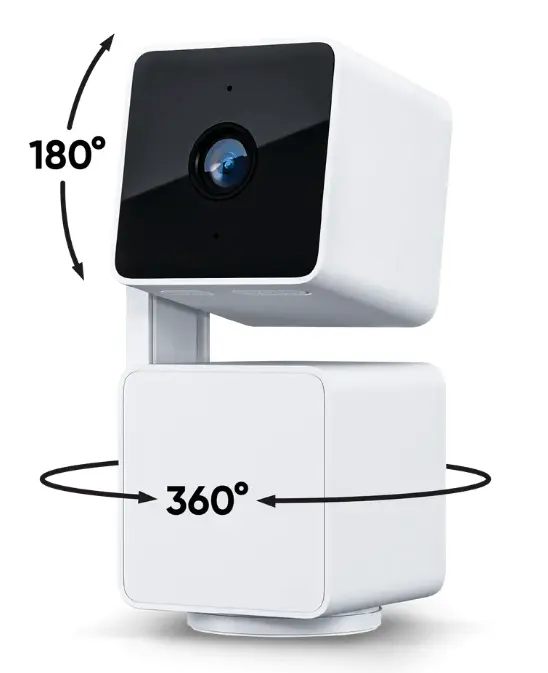
6. Wyze Cam Pan v3 – Best Budget PTZ Camera
$36 |wyze.com
The Wyze Cam Pan v3 is one of the most affordable PTZ security cameras available, but it still offers impressive features for the price. It records in 1080p resolution and provides full 360° pan movement with 180° tilt coverage.
Wyze Cam Pan v3 includes motion tracking, color night vision, and easy app controls, making it ideal for small outdoor spaces like porches or garages. Since it uses wired USB power, you won’t need to recharge batteries, although you do need a nearby power source.
Key Features:
- 360° pan
- Color night vision
- Motion tracking
Pros:
- Extremely affordable
- Easy setup
- Surprisingly capable for the price
Cons:
- 1080p only – not ideal for identifying faces at a distance
- Requires constant power via USB cable
- Build quality feels cheap compared to premium models
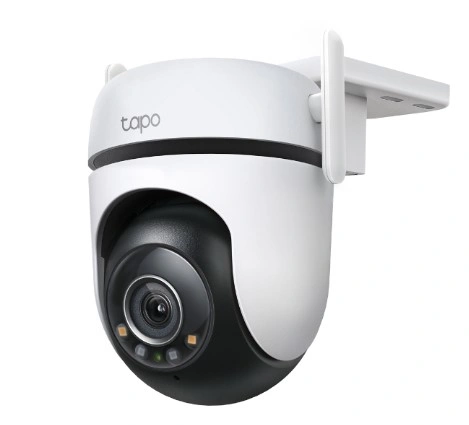
7. TP-Link Tapo C520WS – Best Budget Solar Camera
$80 |tp-link.com
The TP-Link Tapo C520WS is a budget-friendly solar-powered security camera that delivers surprisingly strong performance for its price. It records in clear 2K resolution and offers wide pan and tilt coverage for monitoring outdoor spaces.
The camera supports color night vision, IP65 weather protection, and both SD card and cloud storage options. Because it runs on solar power with battery backup, it’s a great solution for gardens, gates, garages, or remote outdoor locations where wiring would be difficult.
Key Features:
- Solar powered
- 2K video
- Color night vision
- IP65 weather rating
Pros:
- Great value
- No wiring needed
- Reliable solar charging
Cons:
- Tracking response is slower than premium models
- Night vision range is shorter than competitors
- Solar panel is small and needs optimal placement to charge properly
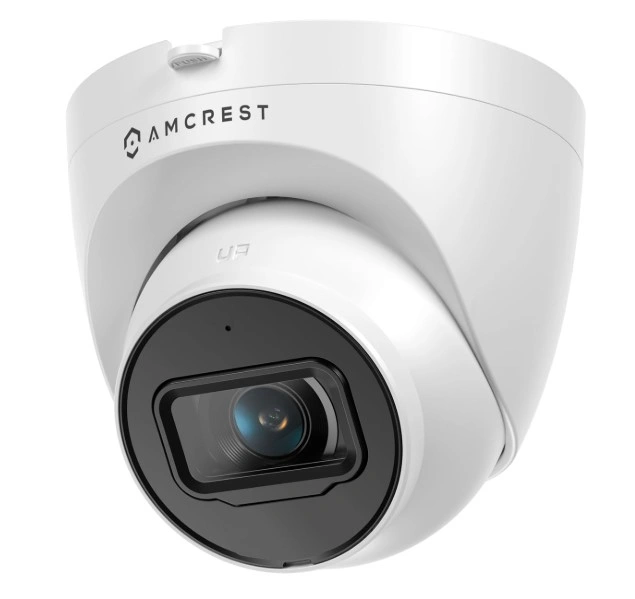
8. Amcrest ProHD PoE Turret Camera – Best Budget PoE Turret Camera
$59.99 | amcrest.com
The Amcrest ProHD PoE Turret Camera is a reliable wired security camera designed for users who want stable performance at an affordable price. It records in detailed 5MP resolution and provides strong night vision coverage up to around 98 feet.
This camera uses PoE (Power over Ethernet), which means a single Ethernet cable handles both power and internet connectivity. The weatherproof metal design makes it suitable for year-round outdoor use. It also supports remote viewing, motion alerts, and multiple storage options including NVR, cloud, and microSD storage.
Key Features:
- Built-in PoE support
- 5MP Ultra HD recording
- Weatherproof metal housing
- Remote mobile viewing
Pros:
- Reliable wired connection
- Clear night vision performance
- Affordable pricing for PoE camera
Cons:
- Requires Ethernet wiring installation
- No built-in solar or battery backup
- App interface can feel outdated for some users
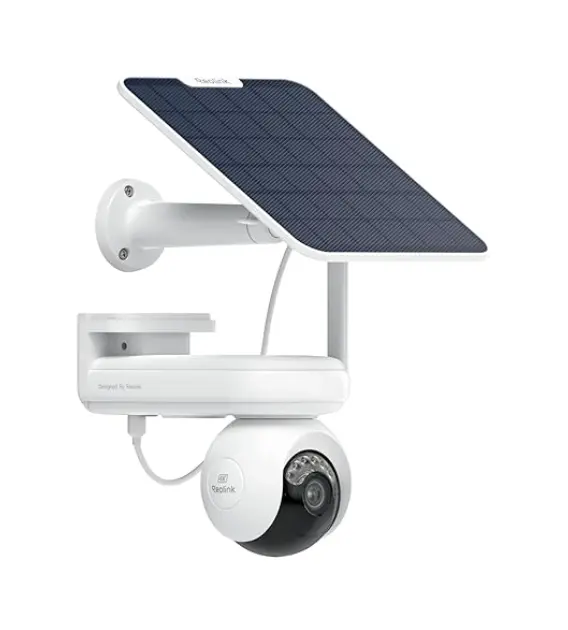
9. Reolink TrackMix – Best AI Auto-Tracking Camera
$100 |reolink.com
The Reolink TrackMix stands out because it uses two lenses together — one wide-angle lens and one zoom lens. This setup allows the camera to automatically follow people or vehicles while also keeping the full scene visible.
Reolink TrackMix records in sharp 4K UHD quality and supports AI-based person and vehicle detection. It offers wide 355° pan coverage and 90° tilt movement, making it ideal for large driveways, parking areas, or backyards. The camera also includes color night vision and supports both microSD and NVR storage.
Key Features:
- Dual-lens AI tracking
- 4K resolution
- Smart alerts
- Color night vision
Pros:
- Incredibly smooth tracking
- Great image quality
- Very affordable for what it offers
Cons:
- Wired only – no battery or solar version
- Dual-lens setup can be overkill for small spaces
- Occasional lag in tracking fast-moving subjects
10. Hikvision ColorVu PTZ – Best for 24/7 Color Recording

$200 |hikvision.com
The Hikvision ColorVu PTZ is a professional-grade outdoor security camera built for users who want reliable color recording even at night. Unlike traditional cameras that switch to black-and-white footage in darkness, Hikvision’s ColorVu technology keeps footage in full color for clearer details.
This camera records in 4MP resolution and supports full 360° pan coverage with 90° tilt movement. It uses PoE power for a stable wired connection and supports both NVR and SD card storage. The durable weatherproof design makes it a strong choice for businesses, warehouses, large homes, and professional surveillance setups.
Key Features:
- Full-color night vision
- PoE powered
- Professional-grade build
- Weatherproof design
Pros:
- Best-in-class night color
- Extremely durable
- Widely supported by NVR systems
Cons
- Overkill for simple home use
- Setup is complex and not beginner-friendly
- Bulkier and heavier than most consumer cameras
Wired vs Wireless vs Solar: Which Power Type Is Right for You?
| Power Type | Pros | Cons | Best For |
| Wired / AC | 24/7 recording, never runs out | Needs an electrician | Busy driveways, front doors |
| Battery | Easy install, truly wireless | Drains fast with auto-tracking | Low-traffic spots |
| Solar | No charging needed | Needs 2–4 hrs direct sunlight | Gardens, remote areas |
| PoE (ethernet) | Single cable, ultra-reliable | Needs tech setup | Professional installations |
Simple rule: if you can run a cable, use wired or PoE. If you can’t, go solar first and battery second.
PTZ vs Fisheye: Which 360 Camera Covers More Ground?
PTZ cameras are active. They physically move, zoom in, and track people across large areas. Best for driveways, backyards, or parking spots where coverage needs to shift.
Fisheye cameras are passive. One wide lens captures everything at once – no movement, no motors. Best for porches, hallways, or smaller yards where the view stays fixed.
There’s also an image quality trade-off to consider. Fisheye lenses stretch and distort the edges of the picture. PTZ cameras zoom cleanly without any distortion.
Bottom line: if people walk through the area, use PTZ. If it’s a fixed, quiet spot, fisheye is the simpler and smarter choice.
How to Install a 360 Degree Outdoor Security Camera
Optimal Mounting Height
Mount between 8 and 10 feet off the ground. Too low and someone can grab or block it. Too high and you lose facial detail.
Avoid Wall Glare and IR Reflection
Don’t point the camera at a white wall or reflective surface. At night, the infrared light bounces back and washes out the image. Angle it slightly away from bright surfaces.
Check Wi-Fi Signal Strength Before Mounting
Hold your phone where the camera will go and check the signal strength. A weak signal means laggy video and dropped footage. Add a Wi-Fi extender if needed before you drill anything.
Angle for Maximum Coverage
Aim the camera slightly downward at about 15–20 degrees. This gives you the best view of faces and license plates without cutting off the ground area.
Privacy Laws and Legal Considerations for 360 Cameras
360-degree cameras create unique privacy and legal concerns because they capture the entire surrounding environment at once. Unlike standard cameras that focus on a single direction, 360 cameras may unintentionally record nearby people, private property, conversations, or sensitive information. To reduce legal risks, users should follow local privacy regulations, obtain permission when necessary, and avoid filming areas where individuals reasonably expect privacy. When publishing or sharing footage, identifiable details such as faces, vehicle license plates, and personal information should be blurred to protect identities.
Understanding the legal and ethical responsibilities of using 360-degree cameras involves several key considerations:
1. Reasonable Expectation of Privacy
- Private Areas: Recording inside homes, offices, or other private locations without authorization can violate privacy laws. Permission should always be obtained before filming in restricted or personal spaces.
- Public Locations: Filming in public places like streets, parks, or shopping areas is generally permitted, as people have a lower expectation of privacy. However, excessive monitoring or tracking specific individuals may still raise legal concerns.
- Audio Surveillance: Laws surrounding audio recording are often stricter than those for video. In some regions, all parties involved must consent before conversations can legally be recorded.
2. Consent and Identifiable Information
- Blurring Sensitive Details: Before uploading or distributing 360-degree footage, visible faces, license plates, addresses, and confidential details should be obscured to prevent privacy violations.
- Surveillance Notifications: Businesses and public venues commonly display CCTV notices to inform visitors that recording is taking place. Clear signage improves transparency and supports legal compliance.
3. Data Security and Compliance
- Protecting Recorded Footage: Security footage should be stored safely using encrypted storage systems, secure passwords, and limited access controls to prevent misuse or unauthorized viewing.
- Privacy Regulations: In jurisdictions with strict data protection laws such as GDPR, facial imagery may be classified as biometric data. Sharing identifiable recordings without consent could result in fines or legal action.
4. Common Use Cases
- Real Estate Tours: Before creating 360-degree home tours, personal items such as family photos, financial documents, or certificates should be removed from view.
- 360 Dashcams: Vehicle-mounted 360 cameras may unintentionally capture pedestrians, nearby vehicles, or private conversations, making proper positioning and microphone settings important.
- Security Monitoring: When installing 360 surveillance cameras in residential areas or apartment complexes, the field of view should not intrude into neighboring homes, windows, or private outdoor spaces.
Conclusion
A 360 degree outdoor security cameras is a smart upgrade for any home because it offers much wider coverage compared to a standard fixed camera. Whether you choose a budget option like Wyze, a solar-powered model from Eufy, or a more advanced system from Hikvision, you get better visibility and fewer blind spots around your property.
For most users, the Reolink Atlas PT Ultra is a strong overall choice. It’s wireless, records in 4K, supports automatic tracking, and is reasonably priced, making it a solid balance of features and value.
If you’re still unsure, just think about a few simple things: where you want to install the camera, whether a power source is available, and how much you want to spend. Once you answer these, it becomes much easier to pick the right camera for your needs.