



Security cameras are becoming less like passive recording devices and more like connected computers capable of interpreting what they see.
The global AI camera market is expected to reach approximately $22.1 billion in 2026, up from $17.7 billion in 2025. AI video surveillance alone is estimated at $8.3 billion in 2026, with demand growing for real-time analytics, facial recognition, object detection, and intelligent threat monitoring.
But adoption is growing alongside privacy concerns. A 2026 survey found that 30% of Americans are more concerned about connected devices collecting data than they were a year earlier. Another study found that 37% of security-camera users worry about who might gain access to their footage.
AI-powered security cameras can make monitoring faster and more useful, but the same technology can also collect sensitive information about people’s movements, faces, vehicles, and behavior.
The challenge is finding the right balance between intelligence and privacy.
What Makes a Security Camera “AI-Powered”?
A traditional security camera records video.
An AI-powered system attempts to understand parts of that video.
Depending on the platform, artificial intelligence may identify people, vehicles, packages, license plates, or other objects. Some systems can detect predefined activity, generate alerts, count people, or make recorded footage searchable.
This reduces one of the biggest problems with traditional surveillance: too much video.
A business may record thousands of hours every month but only need a few minutes when an incident occurs. AI can help narrow the search so security teams spend less time manually reviewing timelines.
The technology is therefore most valuable when it helps people find relevant information rather than simply producing more recordings.
Smarter Alerts Can Reduce Monitoring Fatigue
Older motion-based cameras can generate alerts whenever something moves.
That could mean a person, tree branch, shadow, animal, or passing vehicle.
Too many alerts eventually create alert fatigue. Employees begin ignoring notifications because most of them do not require action.
AI analytics can make alerts more specific.
A company could configure a system to focus on a person entering a restricted area after hours rather than generating a notification for every movement nearby.
This does not make the AI automatically correct.
Algorithms can misclassify events, and unusual situations may lack context. Alerts should therefore direct human attention rather than make important decisions by themselves.
Intelligent Search Can Change Investigations
Search is another area where AI can provide significant practical value.
Imagine a business needs to find a person wearing a red jacket who entered a building sometime during a four-hour period.
A conventional system might require someone to review several camera timelines manually.
An AI-supported platform may allow authorized users to search descriptions, objects, vehicles, or other indexed characteristics.
This can dramatically narrow the amount of footage requiring human review.
However, searchability also increases the sensitivity of surveillance data.
A database containing searchable information about people’s appearances, movements, faces, or vehicles needs stronger controls than a basic recorder sitting in a locked office.
Convenience and privacy therefore need to advance together.
Cloud Storage Changes Where Video Lives
Storage architecture has become another important privacy decision.
Organizations can keep recordings locally, store them in the cloud, or use a combination of both.
Interest in hybrid approaches is growing. A 2026 survey of security-camera users found that 49% preferred a combination of cloud and local storage, compared with 32% who preferred cloud-only storage and 19% who preferred local-only storage.
Modern cloud storage for security cameras can make footage easier to access and scale, especially across several locations. Coram, for example, offers local, cloud, and hybrid storage approaches with configurable retention periods ranging from 30 to 365 days and AI-assisted video search.
The benefit is easier management.
The privacy question is who can access the footage, how it is encrypted, where it is stored, and how long it remains available.
Cloud storage should therefore be accompanied by strong authentication, appropriate permissions, and clearly defined retention rules.
Longer Retention Is Not Always Better
Storage has become cheaper, making it technically possible to retain enormous amounts of video.
That does not mean organizations should.
Privacy-conscious surveillance starts with data minimization. If a business has a legitimate reason to retain footage for 30 days, automatically storing it for a year may create additional risk without providing meaningful value.
Longer retention increases the amount of information exposed if an account is compromised.
Businesses should establish retention periods based on operational needs, incident-discovery times, insurance requirements, and applicable regulations.
Important incident footage can be archived separately when there is a legitimate reason to preserve it.
Everything else can follow a predictable deletion schedule.
Facial Recognition Requires Greater Caution
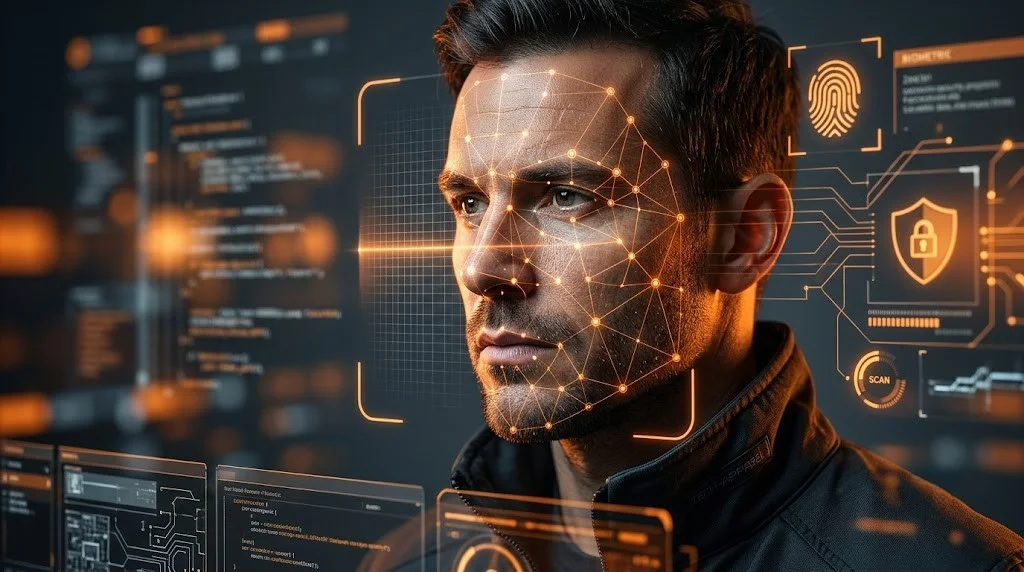
Facial recognition introduces a different level of privacy risk because a face can function as biometric information.
Unlike a password, people cannot simply change their face after a data breach.
Businesses considering facial recognition should therefore ask whether the capability is genuinely necessary.
There may be specific use cases, such as matching against an approved watchlist in a high-security environment, where organizations determine that the technology provides meaningful value.
But using facial recognition merely because a camera supports it is difficult to justify.
Human review is also essential because image quality, viewing angle, lighting, and other conditions can affect matching accuracy.
Protect the Cameras Like Other Network Devices
AI cameras are part of the organization’s technology infrastructure.
They should be protected accordingly.
Weak administrator passwords, outdated firmware, unused accounts, insecure remote access, or poorly configured networks can expose footage even when the cameras themselves are physically secure.
Businesses should use multi-factor authentication where available, promptly remove former employees, apply software updates, and restrict user permissions according to job responsibilities.
Network segmentation can also help prevent security cameras from having unnecessary access to other business systems.
Encryption should protect both stored information and data moving across networks.
Privacy depends as much on cybersecurity as it does on camera placement.
Transparency Matters
People are generally more comfortable with surveillance when they understand why it exists.
A 2026 Harris Poll survey illustrates this tension. While 78% of respondents said they felt safer in parking environments using automated license plate readers, 87% also wanted visible notification that the technology was being used.
That principle extends beyond license plates.
Organizations should have clear reasons for camera placement and explain surveillance where appropriate. Employees should understand workplace policies, and cameras should not be installed in areas where people reasonably expect privacy.
Technology becomes more intrusive when its purpose is unclear.
Use AI for Defined Problems
AI surveillance should begin with a problem rather than a feature list.
If a warehouse struggles with unauthorized after-hours entry, person detection and restricted-zone alerts may be useful.
If a business spends hours searching footage after incidents, intelligent search may provide greater value.
If neither facial recognition nor license plate recognition solves an identified problem, there may be little reason to enable them.
Organizations should periodically review AI features too.
A capability that was useful during one project should not automatically remain active indefinitely.
Good privacy practice means asking not only what technology can collect, but what information the organization actually needs.
FAQs
What Can AI Security Cameras Detect?
Depending on the system, they may identify people, vehicles, objects, faces, license plates, movement patterns, or predefined events.
Are AI Cameras Always Recording?
Not necessarily. Some systems record continuously, while others use event-based recording. Storage and recording behavior depend on configuration.
Is Cloud Camera Storage Private?
It can be secure when encryption, strong authentication, access controls, and appropriate retention policies are used. Businesses should review each provider’s security practices.
Should Companies Use Facial Recognition?
Only where there is a clear and justified use case. Facial recognition involves biometric information and should receive stronger privacy and governance scrutiny.
Can AI Replace Security Personnel?
No. AI can prioritize events and accelerate searches, but human judgment remains important for understanding context and making decisions.
Conclusion
AI-powered security cameras can make surveillance significantly more useful.
Smarter alerts can reduce noise, intelligent search can shorten investigations, and cloud-based management can make large camera systems easier to operate.
But greater intelligence also makes surveillance data more sensitive.
Organizations should control who can access footage, retain recordings only as long as necessary, secure cameras like other network devices, use biometric capabilities cautiously, and remain transparent about monitoring.
The goal should not be to collect everything technology makes possible.
It should be to use the minimum amount of surveillance necessary to solve a legitimate security problem while protecting the privacy of the people who appear on camera.