Accessing the global internet in China can quickly turn into a frustrating experience. Many popular websites, apps, and online services are restricted, making it difficult for travelers, professionals, and businesses to stay connected with the outside world. The situation becomes even more challenging due to strict monitoring, reduced speeds, and constantly evolving censorship measures that block new platforms without warning.
Because of these limitations, finding a reliable VPN for China is no longer optional—it’s a necessity. A well-optimized VPN can create a secure, encrypted connection that helps bypass restrictions and restore access to essential websites and tools. Advanced features like obfuscation technology play a key role in disguising VPN traffic, allowing users to connect more consistently even in highly restricted networks.
However, not every VPN performs well in China. The country’s firewall systems are continuously updated, which means a VPN that works today might struggle tomorrow. That’s why we’ve carefully analyzed and shortlisted the best VPNs that are working right now—so you can choose a reliable option without the guesswork.
VPN for China: Censorship, Speed & Legal Reality Explained
Its incessant insistence is the hallmark of the GFW through monitoring and control. There is an endless arms race between technological tools and VPNs:
- VPN Usage: China has always been among the fastest-growing nations in the world as far as VPN usage is concerned, which is necessitated by the large blocks. Unofficial estimates indicate that 15% or 35% of the population that uses the internet also use VPN, with the primary use being corporate access and to access censored information.
- The Censorship Issue: GFW is so resonant to the extent that exposed examinations conducted in Tier 1 cities have demonstrated that the sites of more than 90% of reputable VPNs are anticipated on local Chinese ISPs, obligating pre-abating installations.
- Speed Impact: Even the quickest VPNs suffer a decrease in speed owing to overheads in encryption and routing of the traffic. Nevertheless, leading services such as NordVPN and Surfshark have shown that they can maintain their base download speed of over 90% in the Asian market when attached to localized servers.
- Legal Situation (Complicated): The unlicensed selling of VPN-related products by the government is envisaged; still, the personal usage of non-approved foreign VPNs by individuals is viewed as a legal grey area.
How the Great Firewall Blocks VPNs (And How to Bypass It)
In selecting the most suitable defense, one needs to be conversant with the attack. The GFW is not a passive filter, but it is a dynamic, artificially intelligent system that combines various tricks at the same time.
1. IP Address blocking (The Blunt Instrument)
- The GFW blocks all the traffic to and from known IP addresses of the popular VPN servers, resulting in instant failure.
- VPN Countermeasure: File continuity, intensive IP diversion.
2. Poisoning of DNS / DNS Spoofing (The Misdirection)
- The GFW blocks DNS requests to online sites by responding falsely with an unreachable IP address.
- VPN Countermeasure: DNS servers of their own, encrypted VPN servers are to be both safe and outside of China.
3. Filter similar to Google or Yahoo
- The GFW is an active scanning engine for sensitive keywords in network traffic. An immediate command a reset the connection triggers when an entity is detected.
- VPN Countermeasure: Intensive encryption protected with obfuscation, so that the metadata of the packets cannot be read either.
4. Deep Packet Inspection (DPI) The Killers of the True vpn.
- DPI examines the structural signature of the VPN data packets and detects traffic that “appears” to be a normal VPN tunnel, irrespective of the encryption within, including unsecured traffic. When the association is identified, it is cut off.
- VPN Countermeasure: Protocol obfuscation (Obfuscation Protocols), which obscures the vpn packets, resembling the normal and innocuous HTTPS packets.
5. Probing Actively
- The GFW transmits certain probe packets to connections, which are believed to be a customer to a VPN. This compelling, definitely targeted interference validates the type of connection that results in a fast and label response block or throttle connection.
Top VPN Technologies That Work in China (DPI & Obfuscation Guide)
To operate reliably within the Chinese context, the typical encryption that uses AES-256 should have DPI routing technology overlaid on top of it.
1. Proprietary Obfuscation Protocols
The most productive VPNs have large investments in the development and support of their own closed-source and high-resistance protocol.
| VPN Provider | Proprietary Protocol Name | Mechanism for China Resilience |
| Astrill VPN | StealthVPN / OpenWeb | Disables the DPI attack. Scrambles Open VPN packet metadata to entirely defeat DPI so that the data stream would be sent as normal web traffic. |
| VyprVPN | Chameleon™ Protocol | Ensures automatic obfuscation of Chinese connections over the VPN, concealing the VPN signature, automatically. |
| ExpressVPN | Lightway (Modified) | Ensures automatic obfuscation of Chinese connections over the VPN, concealing the VPN signature automatically. |
| Hotspot Shield | Hydra Protocol | Designed to be high performance and defiant of censorship, with special layers to stylistic barrier a profound packet inspection and throttling. |
2. Open-Source Anti-Censorship Tools
Some providers use anti-censorship community protocols:
- Shadowsocks: It is a high-speed SOCKS5 proxy that is a modular proxy that is offered by certain operators (such as Mullvad) as an anti-censorship feature.
- V2Ray / VLESS / XTLS: New reform successors of Shadowsocks, more and more to achieve better stealth and stability.
List of 11 Best VPNs That Consistently Defeat the Great Firewall (2026 Edition)
The following ten providers offer the highest chance of uninterrupted internet access.
1. Astrill VPN
- Website: https://www.astrill.com
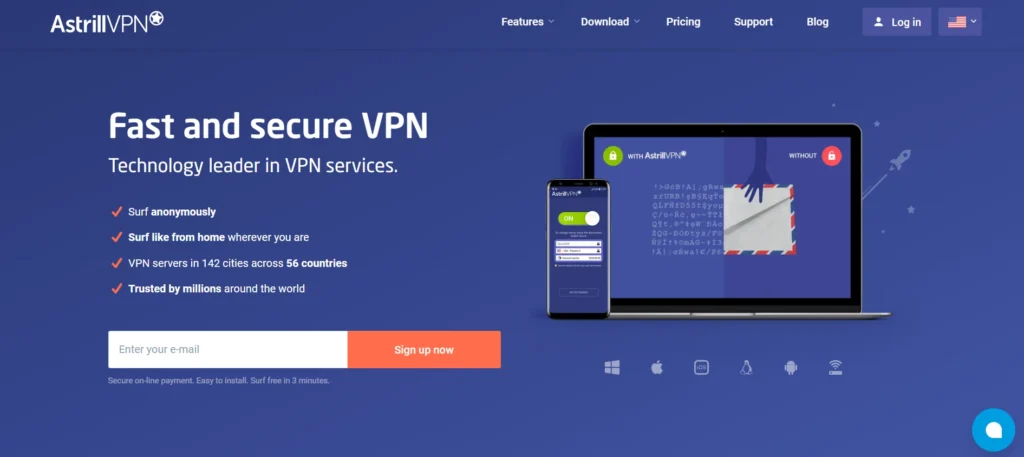
Among long-term expatriates and businesspeople in mainland China, Astrill VPN, a leading VPN for China, possesses an unmatched position, which is mainly due to its business pillar being focused on successful censorship evasion. It keeps the highest take and connection stability even when the Great Firewall is most aggressive. This trust is not cheap, and it warrants the high price of the services as compared to consumer-grade ones.
Astrill has only one success factor, and it is all based on its proprietary connection techniques, mainly the Stealth VPN and the OpenWeb protocols that have been engineered proficiently to handle Deep Packet Inspection (DPI). Although the user interface may be outdated and not as smooth as consumer VPN, the crude performance leaves no competition.
High-speed and steady connections are necessary due to remote working, transfers of large files, as well as HD video conferences are permitted in terms of its service. They also have excellent customer service that is highly expert and full of knowledge in real-time and GFW-specific troubleshooting solutions that are really the only requirement of customers who simply cannot spare downtime or intermittent connectivity.
| Key Features | Why It Matters | Pros | Cons | Pricing Plans |
|---|---|---|---|---|
| StealthVPN & OpenWeb Protocols | Advanced obfuscation designed to bypass China’s strict firewall | High success rate in China, strong performance | Very expensive compared to competitors | 1 Month: $30/month |
| Smart Mode (Split Tunneling) | Lets you route selected apps outside the VPN for better control | 24/7 expert support for GFW issues | No clear refund policy (commitment required) | 1 Year: $15.00/month |
| VPN Sharing (Desktop) | Allows sharing VPN connection across devices | High speeds even with obfuscation enabled | Smaller server network than major VPNs | 2 Years: $12.50/month |
| Kill Switch & DNS Leak Protection | Protects your data if connection drops | Trusted by expat community with proven workarounds | App interface can feel slow and outdated | — |
2. ExpressVPN
- Website: https://www.expressvpn.com
Express VPN would be recommended to any flier who values hassle-free usage, outstanding speed capabilities, and the least engagement with the software. Its competitive advantage in the harsh Chinese setting is also in its capacity to automatically implement obfuscation in all areas of its network, thus leading users to the goal of diving into the arduous environments.
Using its optimized Lightway protocol, the service can make the traffic whose origin is mainland China appear as just ordinary HTTPS, and thus it will not be noticeable by the GFW. The best part about this is that it is a set it and forget it feature, being of much help to the average user. The huge financial assets that the company possesses are continuously used to ensure that there is a very large pool of high-speed servers and changing IP addresses that spin very fast around China, including, but not limited to, Hong Kong, Japan, and Singapore.
The user experience is characterized by the minimum amount of hassle: the app connects fast, it is sustainable throughout lengthy sessions, and it is supported with a medical value of no inquiries asked 30-day money-back theme, enabling the travelers to test the efficacy cost-free right after the landing.
| Key Features | Why It Matters | Pros | Cons | Pricing Plans |
|---|---|---|---|---|
| Automatic Obfuscation (Lightway) | Helps bypass China’s VPN blocks by masking traffic as normal activity | Excellent balance of speed and security | — | Basic: $12.99/month |
| TrustedServer (RAM-only) | Ensures no data is stored, boosting privacy and security | Fast, stable, and secure connections | Fewer simultaneous connections than competitors | Advanced: $13.99/month |
| Split Tunneling & Kill Switch | Lets you control traffic and protects data if VPN disconnects | Strong safety for sensitive browsing | — | Pro: $19.99/month |
| Private DNS on All Servers | Prevents DNS leaks and improves access to blocked content | Reliable unblocking of streaming platforms | — | — |
3. The PrivNet
- Website: https://theprivnet.com/
The PrivNet is an online privacy-oriented tech platform dedicated to safeguard the internet users and assure online liberty. The company has more than 10 years of experience in services related to cybersecurity and digital protection, which is based in Whitefield, Bangalore.
Privnet VPN software is a key element of its package, and it provides protection of the internet traffic by encrypting it using a robust algorithm and concealing the actual IP address of the user. This will enable people to surf the internet anonymously and enter restricted sites without jeopardizing their security.
The purpose of the PrivNet is to offer easy and convenient digital privacy to all people by offering users quick, dependable, and user-friendly tools that help protect the personal information and facilitate a more secure experience on the Internet by users in different parts of the world.
| Key Features | Why It Matters | Pros | Cons | Pricing Plans |
|---|---|---|---|---|
| Encrypted VPN Connection | Keeps your data private and secure | Strong data protection | Limited server locations | Basic: $9.99/mo |
| Access to Blocked Websites | Bypass restrictions easily | Smooth browsing experience | Smaller provider ecosystem | Pro: $14.99/mo |
| Simple User Interface | Easy setup for beginners | Beginner-friendly design | Fewer advanced settings | Ultimate: $24.99/mo |
| Secure Data Protection | Shields against cyber threats | Reliable for daily use | — | — |
| Cross-Platform Support | Works on all devices | Supports mobile & desktop | — | — |
4. NordVPN
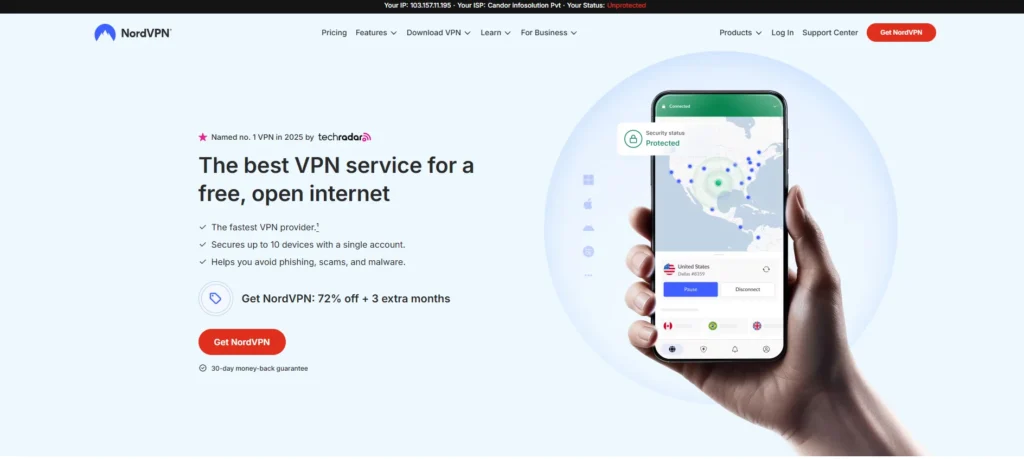
- Website: https://nordvpn.com
A great combination of high-level security, the light lightning speed, and at the same time, at relatively affordable prices, NordVPN is an awesome high-value directive long stay candidate in China. Its functionality in GFW needs privacy settings to be manually specified by users for its obfuscated servers feature in the app. This dedicated list of servers is essential because it implements exclusive stealth technology to make the VPN traffic look as basic as possible and circumvent Deep Packet Inspection.
When properly managed, its customers have been enjoying the powerful security package of Nord VPN that might have the much optimized Nordlynx protocol that ensures a better speed in addition to its double-layered double vPN encryption technology that ensures optimum privacy. Outside of any key areas of large scope surveillance, NordVPN is extraordinarily popular in terms of its established and audited no-logs policy.
Its performance can be slightly inferior to that of Astrill under large-scale GFW blockades; still, with its general speed, low price, and lateral protection affordability and capabilities of such features as Threat Protection and Meshnet, it can be better recommended to users who care more about privacy and value.
| Key Features | Why It Matters | Pros | Cons | Pricing Plans |
|---|---|---|---|---|
| Obfuscated Servers | Bypasses China’s strict VPN blocks | Works well under heavy censorship | May become unstable during strong GFW blocks | Basic: $12.69/month |
| NordLynx Protocol | Ensures faster speeds with security | High-speed performance | Manual setup needed for obfuscation | Plus: $14.99/month |
| Double VPN & Threat Protection | Adds extra privacy layers | Strong security, no-logs (Panama) | Can slow down speed | Complete: $18.29/month |
| Meshnet & Kill Switch | Protects data during disconnects | Secure and reliable usage | Desktop apps can be inconsistent | — |
5. Surfshark
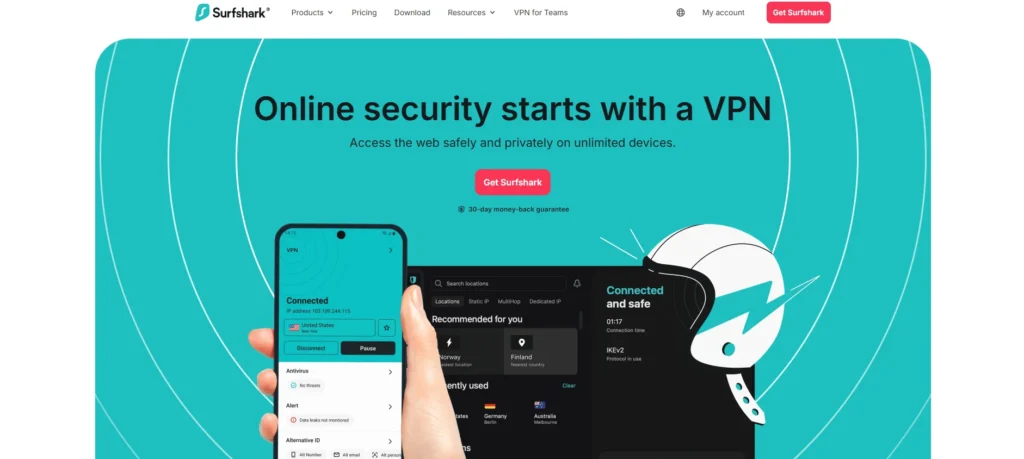
- Website: https://surfshark.com
Surfshark is unparalleled in value, especially for groups, families, or individuals who operate a large number of devices, and offers enterprise-scale obfuscation and a wide range of features at a very low price for the budget. Its greatest selling aspect is its capability to run multiple devices at the same time on a single subscription at its utmost level of cost effectiveness, making it the ideal VPN for China.
The anti-censorship feature of the service, NoBorders Mode, is an automatic system that enables it whenever the app identifies itself as behind a restrictive firewall, according to which all traffic is directed by special stealth servers. This makes it stay connected throughout GFW blockades. Surfshark is fast, especially through its WireGuard setup, and has an expansive network and strategic places of server locations in Macau, Hong Kong, and Taiwan.
Even though its mobile connectivity is sometimes not as resistant as high-end rivals, its overall value, along with added functions such as CleanWeb (malware/ad blockers) and an audited no-logs policy, make it the best alternative to people who are interested in getting the most affordable option without having to compromise on the essential functions of an anti-censorship application.
| Key Features | Why It Matters | Pros | Cons | Pricing Plans |
|---|---|---|---|---|
| Unlimited Devices | Use VPN on all devices with one plan | Best value with unlimited connections | Mobile stability can vary (4G/5G) | Starter: $15.45/month |
| NoBorders Mode (Auto-Obfuscation) | Bypasses strict censorship like China | Very fast with WireGuard | Slower recovery if blocked | One: $17.95/month |
| MultiHop & CleanWeb | Extra privacy + ad/malware blocking | User-friendly apps on all platforms | Based in Netherlands (9 Eyes) | One+: $20.85/month |
| GPS Spoofing & Kill Switch | Hides real location + protects data | Audited no-logs policy | — | — |
6. VyprVPN
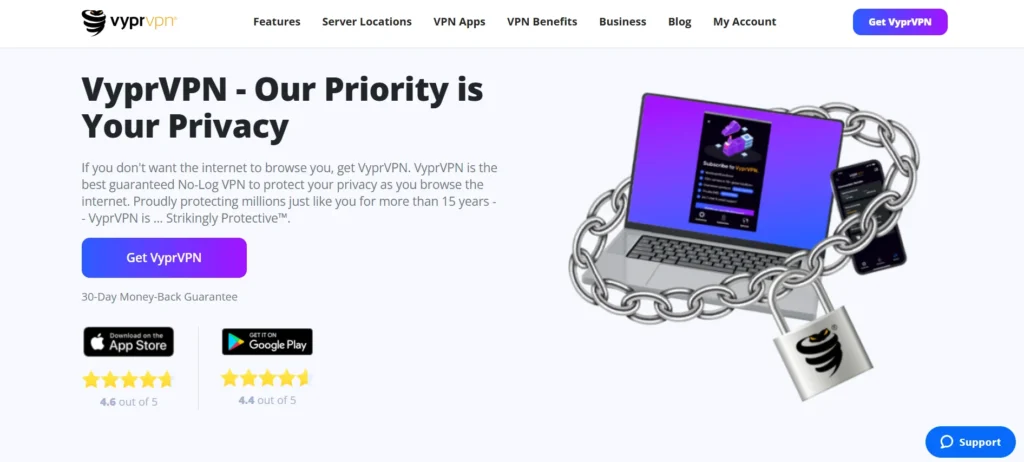
- Website: https://www.vyprvpn.com
Vypr VPN is a very reputable privacy provider whose whole search system is meant to combat censorship with complete independence. The distinctiveness of the company is the desire to own and design 100 percent of global server traffic used by the company with no costly tooling on third-party server hosting and provide an unmatched security, as well as control. The very basis of its GFW strength is the proprietary Chameleontm Protocol.
This technology is specifically crafted to overcome the Deep Packet Inspection (DPI) method by scrambling the Open VPN packet metadata, such that it can be treated as essentially random by the blocking technologies of the GFW, and is great at defeating network throttling. The Chameleon protocol is supreme when deployed in China. VyprVPN is the same when it comes to taking charge of controlling itself; that is why it has its own, zero-knowledge DNS system, VyprDNS, which prevents DNS leaks and poisoning.
This mix of custom-built hardware and proprietary stealth software can establish VyprVPN as an ideal and viable option to other users operating under the conditions of a very restrictive environment structure to attain the high levels of compliance and high-integrity VyprVPN.
| Key Features | Why It Matters | Pros | Cons | Pricing Plans |
|---|---|---|---|---|
| Chameleon™ Protocol | Bypasses DPI with strong obfuscation | Avoids third-party risks | Needs manual enable in apps | 2-Year: $3/month |
| VyprDNS (Private DNS) | Prevents DNS leaks, improves privacy | Strong against throttling | Slightly slower speeds | 1-Year: $4/month |
| Audited No-Logs Policy | Ensures zero data tracking | Verified privacy protection | Account registration required | Monthly: $5/month |
| Kill Switch & Split Tunneling | Protects data during drops | Good speeds with WireGuard | — | — |
7. Proton VPN
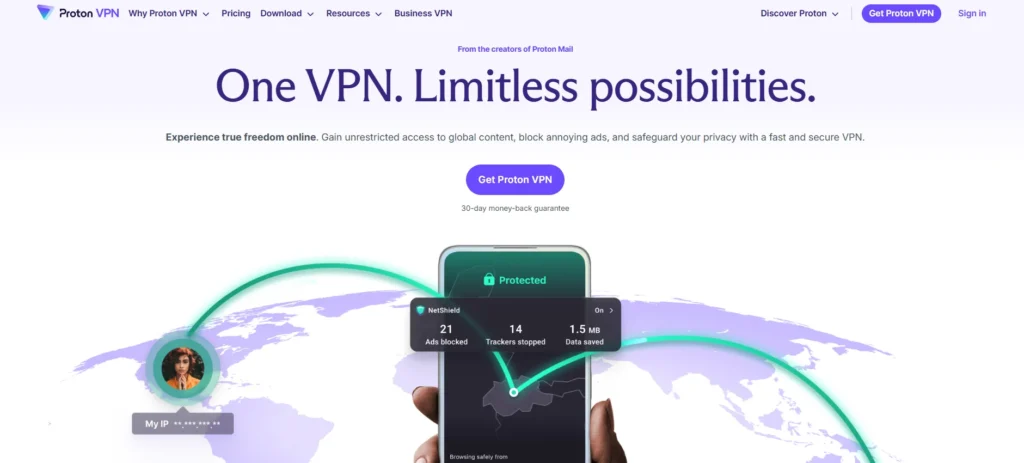
- Website: https://protonvpn.com
Proton VPN is the right product to use as a VPN for China when complete awareness of transparency, safety, and a specific ethical ideology matter to the people, since it is developed by the creators of the highly regarded encrypted email ProtonMail. Proton VPN is located in Switzerland, Canada, which have some of the most potent privacy regulations in the world, and its application software is open-source, which implies that a global security expert would be able to review the code continuously.
Although the company openly admits that its commitment to consistent service is prone to being interfered with by changing GFW, its self-protective Stealth Protocol (which is also manually activated) is an excellent, continuously updated obfuscation feature that can evade firewall and censorship actions.
To ensure it is as secure as possible, its unmatched feature, the Secure Core, uses dedicated servers that are very hardened in privacy-friendly countries, such as Iceland and Switzerland, before forwarding traffic to the destination location in its content, thereby ensuring later defense against highly advanced surveillance and correlation attacks.
| Key Features | Why It Matters | Pros | Cons | Pricing Plans |
|---|---|---|---|---|
| Stealth Protocol (Obfuscation) | Bypasses VPN blocks in restricted regions | Strong privacy, Swiss no-logs | Unreliable in China | Free: $0.00/month |
| Secure Core (Multi-hop) | Routes traffic via secure servers for extra safety | Open-source & audited apps | Expensive long-term plans | VPN Plus: $9.99/month |
| Unlimited Data (Free Tier) | Allows basic usage without limits | VPN Accelerator improves speed | Limited refund policy | Unlimited: $12.99/month |
| NetShield (Ad Blocker) | Blocks ads, trackers & malware | Excellent Linux support | — | — |
8. Mullvad VPN
- Website: https://mullvad.net
Mullvad is potentially the privacy-focused and radical VPN on this list, as the company focuses solely on the anonymity of the user and simplicity. It goes as far as user privacy goes: users do not need to enter their email address or cow and name, and it simply comes up with a random, unique account number, which they can then pay via cash or cryptocurrency to operate in complete anonymity.
Although a very secure and simple service in history, Mullvad has quickly adapted its technology to the GFW challenge. It currently provides Shadowsocks as an anti-censorship tool of specialized use and has also innovated QUIC Obfuscation of its protocol WireGuard over the desktop. Based on this technology, the WireGuard traffic is tunneled within a quick protocol that makes it look like normal HTTP/3 web traffic to the DPI systems.
Even though not streaming-friendly, the transparent and flat pricing system at Mullvad and the war on anonymity make this the best option for all journalists, activists, and privacy purists who consider identity protection as the ultimate asset.
| Key Features | Why It Matters | Pros | Cons | Pricing Plans |
|---|---|---|---|---|
| Anonymous Account Number | No email needed, boosts privacy | True anonymity with cash/crypto payments | Poor streaming support | 1 Month: $5/month |
| QUIC Obfuscation (WireGuard) | Helps bypass censorship & DPI | Simple flat pricing model | Kill switch always enforced | 1 Year: $5/month |
| Shadowsocks & MultiHop | Extra layers for bypass & security | Audited no-logs (Sweden) | No 24/7 live chat (email only) | 1 Decade: $5/month |
| Forced Kill Switch | Prevents data leaks always | Strong default security | Cannot be disabled | — |
9. Private Internet Access (PIA)
- Website: https://www.privateinternetaccess.com
A market leader with a respected reputation in the VPN industry, Private Internet Access is praised by power users as extremely customizable in its software and ironic in its transparency. As a preferred VPN for China, PIA has one of the biggest global server networks, with strategically distributed servers in proximity to China, and is backed by its product devotion to open-source applications and its bureaucratized and ethically proven no-logs policy, publicly examined.
Though PIA does not have a free programmable and proprietary stealth protocol, it does provide control to those users who are technically savvy to an extremely amazing degree; PIA lets those users tailor their level of encryption, the protocol being used, and the port used, to distribute an acceptable configuration that can bypass GFW blocks at least temporarily.
It depends greatly on the success in China, which depends on its use of this manual configuration, which is likely to use the Shadowsocks proxy (provable as a manual configuration) that requires somewhat tighter technical understanding than its competitors’ simple one-click stealth modes. PIA is also a very powerful and dependable center designed to meet the needs of the tech-savvy user needing extreme control of his or her security.
| Key Features | Why It Matters | Pros | Cons | Pricing Plans |
|---|---|---|---|---|
| Massive Server Network (35,000+) | Better access and global connectivity | Proven no-logs policy (audited) | US-based (Five Eyes concern) | 1 Month: ₹900.79/month |
| Open-Source Apps | Transparency and full control | Highly customizable settings | Manual setup for best China use | 1 Year: ₹250.83/month |
| MACE (Ad/Malware Blocker) | Blocks ads and malicious domains | Budget-friendly long-term plans | Weak streaming performance | 3 Years + 3 Months: ₹150.08/month |
| Kill Switch & Split Tunneling | Protects data and controls traffic | Unlimited simultaneous connections | — | — |
10. Hotspot Shield
- Website: https://www.hotspotshield.com
Hotspot Shield is unique because it emphasizes speed and stability with its own proprietary system that Hotspot Shield employs, Hydra Protocol, which is at the core of surpassing global censorship. The Hydra Protocol, built internally and developed with high-performance in mind, is designed to be highly maintainable even when put to the extreme during network congestion or other throttling imposed by the government.
The protocol works very well to overcome geo-restrictiveness and VPN-blockers, thus Hotspot Shield is a surprisingly fast and user-friendly tool to use when trying to unblock blocked streaming sites and social media in China. It can be described as easy and straightforward and does not need the manual configuration of obfuscation options since the Hydra protocol takes care of the stealth and occurs without any issues.
The protocol-level optimization of the Hotspot Shield features of users whose chief interests lie in uninterrupted video conferencing, rapid downloads, and easy video streaming is a good competitor, albeit with a somewhat less predictable adaptation pattern to the most severe updates of the GFW operating system than the best and the most popular among expat users in the selection.
| Key Features | Why It Matters | Pros | Cons | Pricing Plans |
|---|---|---|---|---|
| Hydra Protocol (Proprietary) | Optimized for speed & performance | Fast and stable speeds | US jurisdiction (Five Eyes) | Basic: Free |
| Automatic Stealth (Hydra) | Helps bypass VPN detection in China | Works under moderate restrictions | Less reliable in heavy blocks | Monthly: $12.99/mo |
| Streaming & Gaming Servers | Better performance for media & gaming | Smooth streaming experience | Privacy concerns vs competitors | Yearly: $7.99/mo |
| 45-Day Money-Back Guarantee | Risk-free testing period | Longer refund window | Limited advanced privacy features | — |
11. PrivateVPN
- Website: https://www.privatevpn.com
PrivateVPN is a very narrow and nimble service provider, which stands out due to its ability to offer inexpensive technology and unparalleled streaming capabilities. As a reliable VPN for China, it implements a specific Stealth VPN (obfuscation) mode, which is essential to run behind the GFW. This mode is very effective in masquerading the VPN as a normal internet connection, ensuring users can access their favorite streaming services and communication applications without restrictions.
A high responsiveness and personalized customer support have also been known to possess this feature, where the customer is well-trained in enabling them to give directions to the user in the manual setup required to create an efficient connection when a simple automated connection fails at PrivateVPN. Compared to its prices, the performance of PrivateVPN is notable, and the company has a history of a limited downtime track record despite the regular GFW blockades.
| Key Features | Pros | Cons | Pricing Plans |
|---|---|---|---|
| Stealth VPN (Obfuscation) | Budget-friendly long-term plans | Smaller server network | 1 Month: $9.90/month |
| Strong Streaming Unblocking | Fast and stable speeds | No audited no-logs policy | 3 Month: $6.00/month |
| Kill Switch & App Guard | Responsive customer support | Manual setup required | 36 Month: $2.00/month |
| Port Forwarding & Dedicated IP | Supports up to 10 devices | — | — |
How to Choose the Best VPN for China
Choosing a VPN for China requires more than just looking at basic features. You need a service specifically optimized to bypass strict censorship and maintain stable performance. Here are the key factors to consider:
1. Advanced Obfuscation Technology
In China, standard VPN traffic is easily detected and blocked using Deep Packet Inspection (DPI). A reliable VPN must include strong obfuscation features that mask your connection as normal internet traffic. This ensures consistent access even on restricted networks.
2. Consistent Performance in China
Not every VPN works reliably within China. The firewall is constantly evolving, so you need a VPN that has a proven track record of working in real conditions, not just on paper. Regular updates and adaptive technology are key here.
3. Fast and Stable Speeds
Due to heavy encryption and routing, speed drops are common. A good VPN should minimize this impact and provide stable performance for browsing, streaming, and work without frequent disconnections.
4. Nearby Server Availability
Servers located in regions like Hong Kong, Japan, or Singapore offer better latency and faster speeds. The closer the server, the smoother and more reliable your connection will be.
5. Strong Privacy and Security Features
Look for essential features like AES-256 encryption, a strict no-logs policy, kill switch, and DNS leak protection. These ensure your data stays secure and your online activity remains private under strict surveillance conditions.
Conclusion
The Great Firewall of China is a continuously changing, potentially highly funded technological job that requires a dedicated and proactive attitude. Gone are the days when simple and general-purpose VPNs were reliable and worked at all times. Choosing the right VPN for China, understanding obfuscation technology, and preparing properly before your departure are entirely up to you—you will decide if you succeed in continuing to be digital or not.
Astrill VPN is still the surest option even when one is willing to pay. ExpressVPN is the fastest with easy functioning capabilities. Both Nord VPN and Surfshark can be used as alternatives by users who are budget-conscious without compromising on features and features that will qualify them to navigate the online world in mainland China in 2026.
Never bet with your connectivity; secure your digital life. We disagree.
FAQs
1. Does the Great Firewall Block every VPN?
No, the Great Firewall does not block every VPN—but it blocks most standard ones. China uses advanced techniques like Deep Packet Inspection (DPI) to detect and restrict VPN traffic. Basic or free VPNs usually get blocked quickly. However, premium VPNs with obfuscation technology can still work by disguising traffic as normal internet activity. Even then, performance can be inconsistent, and connections may drop depending on network conditions and ongoing updates to censorship systems.
2. Are VPNs Legal in China?
VPN legality in China is a bit complex. Only government-approved VPNs are officially allowed for businesses and organizations. The use of unauthorized VPNs by individuals falls into a legal grey area. While there have been cases of enforcement against providers, regular users are rarely targeted. However, restrictions exist, and regulations can change, so it’s always recommended to stay informed and use VPNs responsibly.
3. Does VPN use Consume a Lot of Time on my Internet Connection?
Yes, though insignificantly with the best providers. There is a loss of all VPNs because of encryption overhead and diversion of traffic. But tools like NordVPN (with NordLynx) and ExpressVPN (with Lightway) are premium VPNs that are very optimised and have actually proven to be able to sustain a download speed that is over 90 percent of your original download speed when connected to a server that is close to you in Asia.
4. Is it Possible to use a Free VPN to Bypass the Great Firewall?
Absolutely not. Free VPNs are unscrewed since the resources, financial stability, and proprietary technology of obfuscation are not able to overcome DPI. Some of their limited, overloaded servers are immediately blocked, resulting in an insecure, newly-imaged copy of your data, and with no connection at all.
5. Which of the two physical server locations is the fastest?
When it comes to the lowest latency (ping), it is vital to consider geographical proximity. It is important to always reach the fastest server that is located in Hong Kong (HK), Japan (JP), South Korea (SK), or Singapore (SG). It is not advisable to connect to the US or Europe, except that speed does not play a role in what you are doing.