
A night vision security cameras is an essential device designed to see clearly in low-light environments or complete darkness. Most break-ins occur between 10 PM and 6 AM, meaning that if your camera goes blind at night, criminals can easily come and go without being recorded. To combat this, these cameras utilize specialized sensors capable of picking up tiny amounts of ambient light. Additionally, they employ infrared (IR) LEDs placed around the lens to cast invisible infrared light, which the camera translates into a crisp, clear image even when human eyes see only pitch black.
Some newer models take this a step further by using spotlights or starlight sensors to record vibrant, full-color footage at night. The necessity of these devices cannot be overstated. Homes without security systems are 300% more likely to be burglarized. Furthermore, 60% of convicted burglars admit that they would choose a different target if they spotted a visible security camera on the premises
Whether you are a homeowner, a renter seeking a simple plug-in option, or a business owner needing 24/7 monitoring, investing in night vision technology is crucial for protecting your property after dark.
What Is a Night Vision Security Camera?
A night vision security camera is a camera that can see clearly in low light or complete darkness. It works using two main parts. First, a special sensor that can pick up tiny amounts of light. Second, infrared (IR) LEDs around the lens. These LEDs send out invisible infrared light. The camera sees this light and turns it into a clear image, even when your eyes see only black.
Some newer cameras also use spotlights or starlight sensors to record in full color at night. Why is this important? Because most break-ins happen between 10 PM and 6 AM. If your camera goes blind at night, criminals can come and go without being recorded.
Night vision cameras are essential for homeowners who want to protect their family, renters who want a simple plug-in option, and small business owners who need 24/7 monitoring. They also play a vital role in any modern DIY home security system, providing around-the-clock visibility and protection. If you care about safety after dark, you need one.
Types of Night Vision Technology Explained
Infrared (IR) Night Vision
Infrared (IR) night vision is the most common technology used in home security. These cameras rely on a ring of small IR LEDs surrounding the lens, which emit infrared light that is invisible to the human eye but highly visible to the camera’s sensor. When darkness falls, the camera automatically switches to IR mode, bathing the area in infrared light and producing a sharp, high-contrast black-and-white image. This technology is highly reliable for capturing clear details, such as facial features or license plates, in absolute darkness without needing any external ambient light.
Color Night Vision (Starlight / ColorX)
Color night vision technology relies on highly sensitive image sensors, often referred to as starlight sensors, to capture full-color video in low-light conditions without the use of a blinding spotlight. These advanced sensors gather whatever faint ambient light is available, such as moonlight or distant street lamps—and amplify it to render a full-color image. This provides crucial contextual details that black-and-white IR night vision misses, such as the color of an intruder’s clothing or a getaway vehicle.
Spotlight / Floodlight Color Night Vision
Instead of relying solely on sensitive image sensors or invisible infrared light, these cameras use integrated, ultra-bright LED spotlights or floodlights that trigger when motion is detected. When the area is flooded with bright, visible light, the camera is able to record standard daytime-quality color video. Beyond illuminating the scene for a clearer recording, the sudden burst of bright light serves as a powerful active deterrent, startling trespassers and immediately signaling that they are being recorded.
Dual-Mode (IR + Color)
Dual-mode cameras offer the best of both worlds by combining traditional infrared night vision with color night vision capabilities. Under normal low-light circumstances, the camera may operate in stealthy, black-and-white IR mode to conserve energy and remain inconspicuous. However, the moment the camera detects human motion, it can instantly activate its built-in spotlight to switch over to full-color recording. This allows users to enjoy covert monitoring most of the time, while still capturing vital color details precisely when an event occurs.
Quick Comparison: Top 10 Night Vision Security Cameras at a Glance
Here’s a quick look at our top 10 picks before we dive into details.
| Camera | Price | Resolution | Night Vision Type | Storage | Subscription Needed? |
| Wyze Cam v4 | $36 | 2.5K | Color + IR | Cloud / microSD | Optional |
| Blink Outdoor 4 | $99 | 1080p | IR | Cloud / USB | Yes for cloud |
| Reolink Argus 4 Pro | $199 | 4K | Color (ColorX) | microSD / NVR | No |
| Arlo Pro 5S | $249 | 2K | Color + Spotlight | Cloud | Yes |
| Eufy SoloCam S340 | $199 | 3K | Color + Spotlight | Local 8GB | No |
| Google Nest Cam (Battery) | $179 | 1080p HDR | Color + IR | Cloud | Yes |
| Ring Stick Up Cam Pro | $179 | 1080p HDR | Color + IR | Cloud | Yes |
| Lorex 4K NVR System | $499 | 4K | IR + Color | Local NVR | No |
| TP-Link Tapo C325WB | $79 | 2K | Color | microSD / Cloud | Optional |
| Reolink Altas PT Ultra | $279 | 4K | Color (ColorX) | microSD / Cloud | No |
List Of Top 10 Night Vision Security Cameras in 2026
Best Night Vision Cameras for Home Security
1. Wyze Cam v4

The Wyze Cam v4 is an incredibly affordable yet powerful home security camera. It boasts impressive 2.5K HD video resolution and a starlight sensor for superior color night vision. With a built-in spotlight, it effectively illuminates dark areas, ensuring crisp footage. While it requires a power cord, users appreciate the free local storage via microSD, making it a budget-friendly powerhouse without mandatory subscription fees.
Pricing: $36
Key features:
- 2.5K HD video recording
- Color night vision with starlight sensor
- built-in spotlight
- Free local storage with microSD
Pros:
- Very low price
- Excellent night image
- Easy setup
Cons:
- Needs power cord
- Cloud features cost extra
- No battery option
2. Google Nest Cam (Battery)

Designed for seamless smart home integration, the Google Nest Cam offers crisp 1080p HDR video and highly accurate smart AI alerts that differentiate between people, animals, and vehicles. Capable of both indoor and outdoor use, it features a reliable three-month battery life per charge. It utilizes color and IR night vision for comprehensive dark monitoring. Unlocking its best features requires a Nest Aware subscription.
Pricing: $179
Key features:
- 1080p HDR video
- Smart AI alerts (person/package/animal)
- Indoor and outdoor use
- 3-month battery life
Pros:
- Smart AI is very accurate
- Works without a hub
- Great app
Cons:
- Best features need Nest Aware subscription
- Only 1080p
- Pricey
Best Night Vision Cameras for Small Business
3. Lorex 4K NVR System

The Lorex 4K NVR System is a heavy-duty, wired security solution built for expansive properties and businesses. It features multiple 4K cameras delivering unmatched clarity and an impressive 150-foot infrared night vision range. Providing 24/7 continuous recording directly to a local Network Video Recorder (NVR), it guarantees reliable monitoring without any monthly fees. This weatherproof system ensures maximum durability in extreme outdoor conditions.
Pricing: $499
Key features:
- 4K resolution on all cameras
- 150 ft IR night vision range
- Local NVR storage (no cloud needed)
- Wired for reliability
Pros:
- No monthly fees
- Long IR range
- Very reliable
5Cons:
- Pro installation may be needed
- Higher upfront cost
- Wired only
4. Reolink Argus 4 Pro

The Reolink Argus 4 Pro is a premium wireless camera delivering stunning 4K Ultra HD video alongside true ColorX night vision without needing a spotlight. Ideal for businesses or homes, it operates via battery or an optional solar panel for continuous power. By saving footage directly to a local microSD card, users maintain full control over their data while entirely skipping expensive monthly cloud subscription fees.
Pricing: 199
Key features:
- 4K Ultra HD video
- ColorX true color night vision
- Battery + solar panel option
- Local microSD storage
Pros:
- No subscription
- True color in dark
- Easy install
Cons:
- App can lag
- Smaller IR range than wired options
- Battery needs charging
Best Night Vision Cameras for Apartment / Renters
5. Blink Outdoor 4

The Blink Outdoor 4 is a fully wireless security camera that runs on two AA batteries, offering an impressive lifespan of up to two years. It eliminates the need for drilling, ensuring hassle-free installation. This weather-resistant camera records in clear 1080p resolution and utilizes reliable infrared (IR) night vision to keep your property monitored. Note that a subscription is required for cloud storage.
Pricing: $99
Key features:
- Wireless with 2-year battery life
- IR night vision
- Weather resistant
- Works with Alexa
Pros:
- Long battery
- Easy to move
- Simple setup
Cons:
- Only 1080p
- Cloud needs subscription
- No color night vision
6. TP-Link Tapo C325WB

The TP-Link Tapo C325WB is an exceptionally affordable, plug-in camera that doesn’t compromise on low-light performance. It records in sharp 2K resolution and utilizes advanced starlight technology for remarkable full-color night vision. Designed for extreme weather, this weatherproof camera includes free AI person detection to minimize false alerts. It supports local microSD storage, allowing users to avoid mandatory subscriptions entirely.
Pricing: $79
Key features:
- 2K resolution
- Full-color starlight night vision
- Free AI person detection
- Weatherproof
Pros:
- Very low price
- No subscription needed
- Free AI
Cons:
- Needs power outlet
- App can be slow at times
- No battery model
Best Night Vision Cameras for Large Properties / Farms
7. Reolink Altas PT Ultra

Designed for large properties like farms and ranches, the Reolink Altas PT Ultra is an expansive pan-and-tilt camera offering a full 360-degree view. It captures stunning 4K video using ColorX true color night vision technology. Powered by a massive 20,000 mAh battery that lasts up to eight days, it’s also solar panel compatible. With local storage, it provides massive coverage completely free of monthly subscriptions.
Pricing: $279
Key features:
- 4K with ColorX color night vision
- Pan and tilt (360° view)
- Huge 20,000 mAh battery
- Solar panel compatible
Pros:
- Massive coverage
- Long battery
- True color at night
Cons:
- Higher price
- Larger size
- Needs decent Wi-Fi range
8. Lorex 4K Bullet Camera (extra units)

Designed specifically for very large properties, these extra 4K bullet cameras connect directly to an existing Lorex NVR system. Each highly durable, IP67 weatherproof unit easily handles heavy rain and snow while providing an impressive 150-foot infrared night vision range. By saving all captured footage locally to the NVR, users ensure full data privacy and avoid any monthly fees while seamlessly expanding their security coverage.
Pricing: $100
Key features:
- 4K resolution
- 150 ft IR range
- IP67 weatherproof
- Connects to existing NVR
Pros:
- Long range
- Expandable
- No fees
Cons:
- Wired only
- More setup
- Needs NVR
Best Night Vision Cameras Without Monthly Fees
9. Eufy SoloCam S340

The Eufy SoloCam S340 is a standalone powerhouse renowned for completely eliminating monthly fees. It features dual lenses providing sharp 3K video, combining a wide view with zoomed-in details simultaneously. Equipped with a built-in spotlight for color night vision, it also includes an integrated solar panel for endless, self-sustaining power. All footage is securely stored on its local 8GB storage, maximizing privacy and convenience.
Pricing: $199
Key features:
- 3K dual-lens video
- Spotlight for color night vision
- Local 8GB storage
- Solar panel included
Pros:
- No fees ever
- solar powered
- dual lens covers more area.
Cons:
- Local storage fills up fast
- no free cloud backup
- app sometimes glitchy.
10. Reolink Argus 4 Pro (re-listed for value)
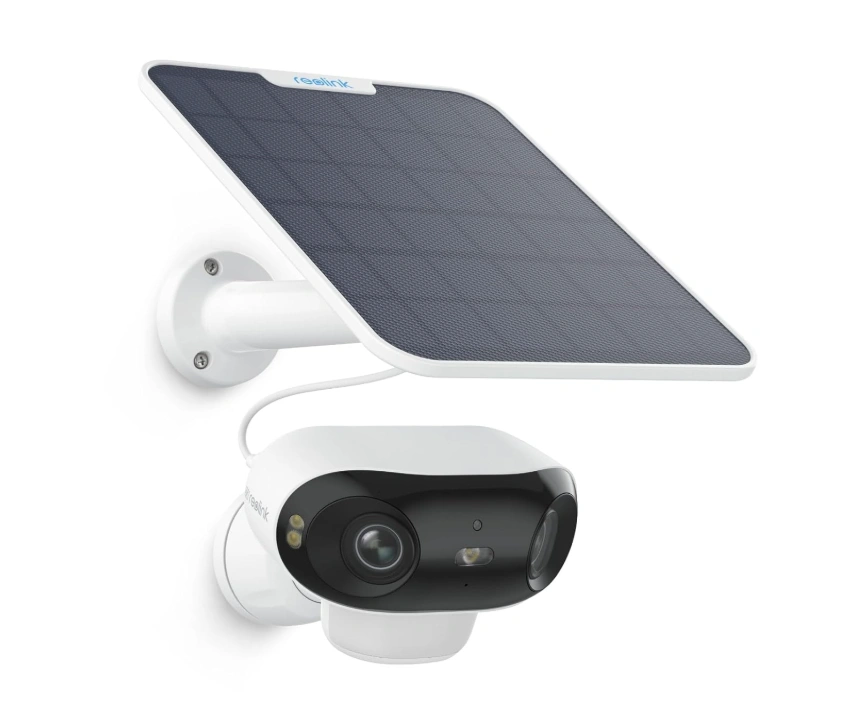
Already on our list, but worth a second mention because it’s one of the few 4K cameras with no required monthly fee. ColorX night vision plus local storage means you keep your footage and your money. The battery and solar panel combo makes it easy to install anywhere, even far from power outlets. A strong pick if no fees matter most.
Pricing: $199
Key features:
- 4K Ultra HD resolution
- ColorX true color night vision
- Battery and solar panel power
- Local microSD storage
Pros:
- No monthly fees
- True 4K color at night
- Easy to install anywhere
Cons:
- App can lag at times
- Battery needs recharging if no solar
- Smaller IR range than wired models
How to Choose the Right Night Vision Security Camera
1. Video Resolution: Does It Matter at Night?
When comparing 1080p, 2K, and 4K resolutions in low light, higher resolution generally provides much finer detail, which is crucial for zooming in on faces or license plates. However, resolution alone doesn’t determine night video quality. A 4K camera with a small, cheap sensor might perform worse in the dark than a 1080p camera equipped with a high-quality starlight sensor. The physical size of the image sensor and the camera’s internal processing power are just as important for gathering light as the pixel count.
2. IR vs Color Night Vision – Which Should You Choose?
The choice between infrared (IR) and color night vision comes down to a fundamental tradeoff between stealth and deterrence. IR cameras operate silently using invisible lights, making them ideal for covert monitoring where you want to catch an intruder unaware. Conversely, color night vision that relies on a bright spotlight actively deters trespassers but makes the camera’s location blatantly obvious. For example, a discreet IR camera is an excellent choice for a hidden backyard camera, while a bright spotlight camera is better suited as a neighborhood camera to ward off driveway lurkers.
3. Power Source: Wired, Battery, or Solar?
Your camera’s power source dictates where it can be installed and how much maintenance it will require over time. Wired cameras offer 24/7 reliability but limit your placement options, whereas battery models offer ultimate freedom at the cost of manual recharging. Solar power bridges the gap, providing the wire-free placement of a battery camera with the endless power of a wired one.
Here is a quick look at the pros and cons of each:
| Power Type | Pros | Cons |
| Wired | Continuous power, highest reliability, no charging. | Requires a nearby outlet, harder to install. |
| Battery | Can be placed anywhere, incredibly easy to install. | Requires regular manual recharging, batteries drain faster in the cold. |
| Solar | Eco-friendly continuous power, set-it-and-forget-it convenience. | Requires placement in direct sunlight, adds to upfront cost. |
4. Cloud Storage vs Local Storage – Which Is Safer?
Deciding where your security footage is saved is critical for both convenience and privacy. Most modern CCTV camera brands offer a combination of cloud and local storage options, allowing users to choose the level of accessibility and data protection that best suits their needs. Local storage, such as a microSD card or private NVR, is generally considered safer because it gives you complete control over your footage. To get the best of both worlds, some cameras offer hybrid storage, allowing you to save high-resolution files locally while keeping a compressed backup in the cloud.
5. AI Detection: Why It Reduces False Alarms
Basic motion detection simply reacts to any pixel change in the frame, which leads to a constant barrage of false alarms triggered by swaying tree branches, heavy rain, or passing insects. Advanced AI detection significantly reduces this frustration by distinguishing between actual threats (like a person or vehicle) and harmless movement (like a pet or shadow). It is important to note that brands like Wyze, TP-Link, and Eufy offer this smart AI detection for free, whereas companies like Arlo, Ring, and Nest require a paid monthly subscription to unlock AI features.
6. Night Vision Range – How Far Can Your Camera See in the Dark?
An average security camera’s infrared range typically covers about 25 to 30 feet, which is perfectly adequate for a standard front porch or tight entryway. However, premium cameras feature powerful IR LEDs that can illuminate targets 50 to 100 feet away. If you need to monitor expansive properties like large driveways, farms, or commercial lots, consider investing in PTZ models and advanced outdoor security cameras that can physically rotate and zoom to maximize your night vision coverage.
7. Weather Resistance (IP Rating) Explained
If you are mounting a camera outdoors, checking its Ingress Protection (IP) rating is essential to ensure it survives the elements. An IP65 rating means the device is highly “water-resistant” and can easily handle standard rain, snow, and dust. An IP67 rating, however, means the camera is completely “waterproof” and dust-tight, capable of surviving extreme weather and even temporary submersion. For general outdoor use, you should look for a rating of at least IP65, but upgrade to IP67 if the camera will be completely exposed to harsh, heavy storms.
Night Vision Camera Performance in Different Conditions
Night vision camera performance can vary depending on lighting conditions, weather, and installation location. Understanding how cameras operate in complete darkness, low-light environments, adverse weather, and through glass can help you choose the best security solution for reliable nighttime surveillance.
Night Vision in Complete Darkness (No Ambient Light)
When a camera is placed in an environment with zero ambient light, it cannot rely on its standard optical sensors. Instead, what happens is the camera automatically switches over to its built-in infrared (IR) LEDs or activates a bright, motion-triggered spotlight to illuminate the pitch-black scene. For environments like enclosed windowless garages or completely unlit rural backyards, cameras with robust IR capabilities or active spotlights perform best. Top contenders for complete darkness include the affordable Wyze Cam v4 and the fully wireless Blink Outdoor 4.
Night Vision With Ambient Light (Street Lights / Moon)
If your camera is positioned in a suburban neighborhood with street lights, or a yard softly illuminated by the moon, starlight sensors are the ideal technology. These highly sensitive lenses perform exceptionally well by taking that minimal ambient light and digitally amplifying it. The result is that color footage is completely possible without needing to trigger a disruptive, bright spotlight. This provides richer contextual details, like the color of a vehicle or a shirt, while keeping the camera’s presence relatively stealthy.
Night Vision In Fog, Rain, and Snow
Adverse weather conditions present a unique challenge for standard night vision. When precipitation is heavy, infrared light physically bounces off the dense water particles, snowflakes, or fog droplets hovering in the air directly in front of the lens. This creates a blinding “white-out” effect, resulting in poor performance and severely degraded image quality. If you live in an area prone to harsh weather, you need to look for cameras featuring better IR management, advanced image processing, or spotlight options that mitigate this distracting glare.
Night Vision Through Glass / Windows
A common mistake homeowners make is pointing an indoor camera out of a window to monitor the front yard. This does not work at night. Because a window is a reflective surface, the invisible infrared light emitted by the camera will immediately reflect off the glass and bounce straight back into the lens, overexposing the image and rendering the footage completely useless. This is exactly why you must mount cameras outside if you want to capture usable night vision video, avoiding window glare entirely.
Installation Tips for Best Night Vision Performance
Where and how you install your camera makes a huge difference. Here are the most important tips.
- Avoid window glare. Always mount cameras outside, not behind glass. IR light reflects off windows and ruins the image.
- Keep distance from walls and overhangs. Mounting too close to a wall causes IR light to bounce back into the lens. Leave at least 6 to 12 inches of clearance.
- Clean the lens often. Spider webs, dust, and water spots cause blurry footage. Wipe the lens with a soft cloth every few weeks.
- Mount at the right height and angle. Around 8 to 10 feet high is ideal. Angle the camera slightly downward to capture faces but not just the tops of heads.
- Use a smart placement plan. For front doors, mount above the door looking down at face level. For driveways, place the camera on a corner so it sees the full driveway and the road. For backyards, position it high in a corner so it covers the patio and yard exit points.
- Watch out for IR light bleed. If your IR camera is too close to a white wall or reflective surface, the IR will bounce back and overexpose your image. Aim away from light-colored surfaces when possible.
Privacy and Security Considerations
A security camera is meant to protect you. But if it’s not set up right, it can put your privacy at risk.
- Turn on Two-factor authentication (2FA). This stops hackers from getting into your camera account even if they steal your password.
- Use privacy zones. Most camera apps let you block out parts of the image. Use this to hide your neighbor’s window or your own bedroom from the recording.
- Update firmware regularly. Camera makers release updates that fix security holes. Set updates to install automatically if possible.
- Know the laws about pointing at neighbors. In most places, it’s illegal to record your neighbor’s private spaces. Aim your cameras at your own property only. This builds trust and keeps you out of trouble.
- Look for end-to-end encryption. This means only you can see your footage – not even the camera company can. Apple HomeKit Secure Video, Eufy, and some Nest cameras offer true end-to-end encryption. Most basic cloud cameras do not.
Final Verdict
The best night vision camera depends on what you need. If you want a low-cost camera that does almost everything well, get the Wyze Cam v4. If you’re a renter who needs a no-fuss wireless option, the Blink Outdoor 4 is perfect. For pure 4K quality with no monthly fees, choose the Reolink Argus 4 Pro. For large properties, the Reolink Altas PT Ultra with its huge battery and pan-tilt feature is hard to beat.
Whatever you choose, remember: a good night vision camera is only as good as where you place it. Mount it right, secure your account, and you’ll have round-the-clock protection that gives you real peace of mind. Stay safe out there.