

10 Best DIY Home Security System: Smart, Affordable Protection for Modern Homes
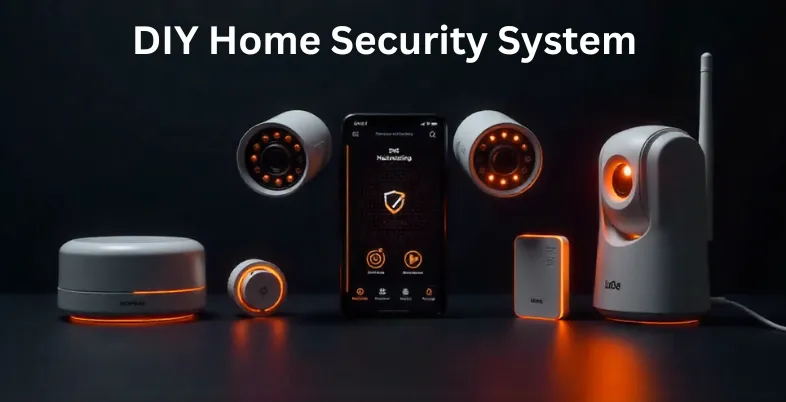
Home security has come a long way from old wired alarms and expensive professional installations. Today’s homeowners are turning towards smart, adaptable, and plug-and-play solutions that bring convenience and reassurance at their fingertips. A DIY Home Security System gives users total command over their home’s security without the inconvenience of contracts and technician calls.
With wireless sensors, smart cameras, and easy-to-use mobile apps, these systems enable you to monitor, manage, and act on security events anywhere, anytime. From motion detection to real-time alerts and AI-powered deterrence, they combine cutting-edge tech with affordability.
Live in an apartment, a small home, or a big house. DIY systems give you total protection tailored to your lifestyle—providing both freedom and innovation in one smart bundle. It’s simple security, made easy, and made for today’s connected home.
What Is a DIY Home Security System?
The DIY home security system is an advanced user-installable network of sensor-equipped devices and smart sensors meant to secure an establishment. Such systems are characterized by messages that are flexible, and no long-term contracts are made. The homeowner does not need to use technicians and does not need to sign a contract with the traditional security companies; instead, they buy the hardware themselves and place it in the establishment by simple peel-and-stick adhesives and mobile apps manuals.
This system is designed such that it revolves around a Base Station/Hub (the brain), which is able to communicate with the rest of the components wirelessly. The users have the option of Self-monitoring and receiving alerts on their mobile application (Self-monitoring, obtained once a month) or Professional Monitoring based on a month-to-month plan (24/7 service sending emergency services).
Internal Arrangements and Capabilities:
- Wireless Sensors: Glass break sensor, door/window entry sensors, and motion detectors.
- Cameras: Interior, exterior, and cameras used to check the door.
- Cellular Backup: A Facility that allows the hub to keep in touch with the monitoring center even in case of loss of Wi-Fi and power.
- Proactive Deterrence: The systems in modern are AI-powered and two-way audio-operated, which communicate with and prevent intruders before breach achievement.
Why Choose a DIY System? The Flexibility and Financial Advantages
The Home security market has been impacted more positively by the DIY sector, as it has granted the consumer with authority, economically, and technology, as the segment of the market is currently the fastest-growing.
1. No Contracts and Financial Freedom
Financial transparency is the most important strength of the DIY model. Users:
- Eschew Installation Costs: There is no reason to spend a lot on technician delivery.
- Cease Long-Term Contracts: Professional monitoring is provided on a convenient month-to-month basis, which can be canceled or reduced at any point.
- Select Self-Monitoring: A number of the leading services provide a free self-monitoring option, so the user will use no extra fee other than the price of the equipment.
2. Contemporary Integration and Artificial Intelligence Deterrence
The systems are made to suit the current generation smart home with advanced proactive features:
- Active Deterrence: Some of the functions, such as the Active Guard integrated with SimpliSafe, include human operators and camera feeds (only on confirmed alarm actions) to intervene remotely, speak to the intruder and shorten the emergency response time with video verification of the threat.
- Smart Home Compatibility: Systems such as Abode and Ring can be easily connected with other large ecosystems, such as Apple HomeKit, Alexa, and Google Assistant, so that users can create complicated automation blocks (e.g., opening doors and turning on the lights when the alarm is armed).
List of Top 10 DIY Home Security Systems
1. SimpliSafe
- Website: https://simplisafe.com/
- Price (Approx.): $250
SimpliSafe is the leader in the field of DIY security, with its easy, tool-free installation process and new Intruder Intervention features. It has a scalable system that can be easily managed through a very intuitive app. Its equipment has a good reputation, has physical privacy shutters on its indoor cameras, and has efficient motion/entry sensors. SimpliSafe has flexible professional monitoring and powerful free self-monitoring, which makes it the best option to use when the user wants a reliable and the ease of direct and direct protection.
Key Features: Foolproof peel/stick installation, Active Guard Intruder Intervention, Cellular and battery back-up and Environmental sensors (water, freeze, smoke), Optional professional monitoring (month-to-month).
Pros: simplest system to install; impressive remote deterrent selection; excellent privacy (physical camera shutter); today, extremely high customer satisfaction scores.
Cons: Remote arming/disarming can be offered starting with a paid plan; some expensive premium levels of monitoring may be proposed.
2. Ring Alarm Pro
- Website: https://ring.com/products/alarm-pro-base-station
- Price (Approx.): $199.99
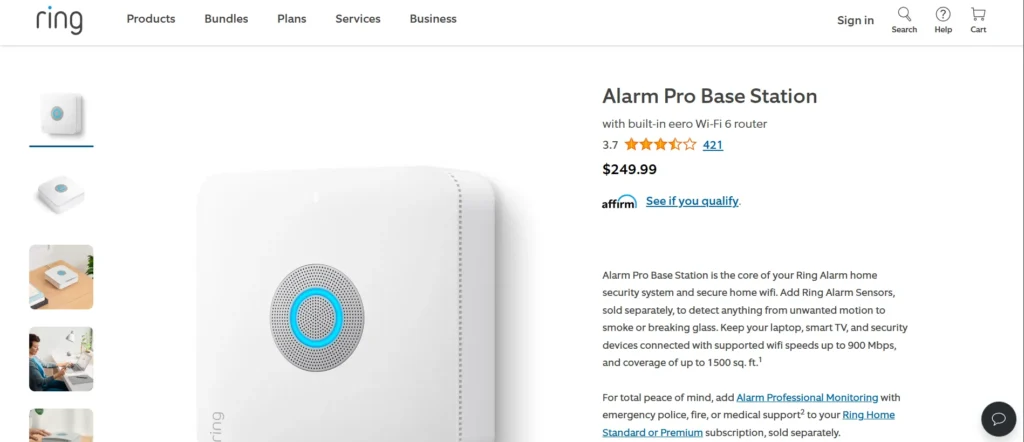
The Ring Alarm Pro is a winner in terms of video integration and stability on the network. As part of a leading DIY Home Security System, it combines advanced connectivity with ease of setup. The Eero Wi-Fi 6 mesh router also acts as the system’s hub, extending Wi-Fi range and serving as local storage for Ring cameras. Being a giant ecosystem within Amazon, its integrations with Alexa and Blink devices are seamless. Ring also offers the most affordable video tracking package—an unlimited Ring camera plan at a low monthly price—making it ideal for households that require extensive video coverage.
Key Features: Integrated Eero Wi-Fi 6 Router, Local Video Processing/Storage, Exceptionally low-priced video surveillance plan (unlimited cameras), a large variety of cameras and door bells, and Cellular backup.
Pros: Video surveillance is very cheap with unlimited cameras; choice of camera equipment is outstanding; router is built into the system, assuring connectedness; easy do-it-yourself installation.
Cons: Most smart alerts and remote access to video use a subscription; the connectivity configuration to existing non-Ring networks may become challenging.
Also Read: Security Awareness Training Software
3. Scout Alarm
- Website: https://www.scoutalarm.com/
- Price (Approx.): $229
Scout Alarm is a device that has been designed keeping in mind the contemporary thinking consumer of the smart home. Scout does not feature any small aperture in the door that allows entrants to scan a code; it features a signature Access Panel, going around the door frame, which is a visible and smooth element of the security system. it is also effective in the field of IFTTT and third-party smart home integration (e.g. smart locks, lighting) because the platform works as open architecture and can be profoundly customized. Another innovative program offered by Scout is the community- watch- like alert system dubbed Scout Neighbors thus making it very popular with users who appreciate the collaborative nature of local security.
Key Features: Extremely customizable using Z-Wave and Zigbee communications; Sleek, beautiful door Access Panel; Month-to-month professional monitoring; Obsess over user-created smart home routines.
Pros: Smooth aesthetic appeal and low profile design; Strong integration capability with expertise smart home users; Useful in alerting neighborhood community members.
Cons: The machinery is expensive (above average); Technically comfortable Advanced integration.
4. ADT Self Setup
- Website: https://www.adt.com/diy
- Price (Approx.): $199
ADT Self Setup is the DIY product, created by the long-standing security institution ADT, which combines DIY ease of installation with a lifetime, professional monitoring experience of ADT of 150 years. The devices often have a high-quality Google Nest Cam (that has better AI ability, person detecting, and face recognition), which is the highest in terms of quality video verification. Although ADT Self Setup obliges the minimum one-month purchase of professional monitoring, it boasts the best reliability and redundancy through its multiple monitoring centers, which is desirable to users who want name-brand equipment and have a proven ability to respond professionally.
Key Features: Google Nest Cam integration (AI is the best), 24/7 Professional Monitoring, Cellular backup, DIY installation, and High-quality video information verification.
Pros: Professional response time that is the leading in the industry; quality Google Nest camera hardware; customizable monitoring strategies offered beyond the entry purchase; good reputation with security services.
Cons: More expensive than either SimpliSafe or Ring; initially has to buy a month of professional monitoring; video storage uses the Google ecosystem.
5. Cove
- Website: https://www.covesmart.com/
- Price (Approx.): $86
Cove positions itself as one of the most affordable, no-contract professional monitoring solutions in the market. As a DIY Home Security System, it offers pre-paired equipment that connects effortlessly to the hub, making setup quick and straightforward. Cove is highly regarded for its low-cost professional monitoring plans (starting at $19.99/month) with built-in cellular backup for uninterrupted protection. Designed for simplicity and efficiency, it’s an ideal choice for users seeking reliable 24/7 security without overspending on expensive installations or long-term contracts.
Key Features: Professional monitoring (no contract), Systems are delivered ready to use, Single-touch emergency response features, Easy to use interface (keypad and mobile app), Cellular backup is included with all plans.
Pros: Unmatchable industry-leading prices on professional monitoring; equipment is very cheap; installation is lightning-fast, meaning do it yourself; high customer satisfaction scores.
Cons: No free option of self-monitoring (must have a monitoring subscription); there are not too many options in cameras.
6. Frontpoint
- Website: https://www.frontpointsecurity.com/
- Price (Approx.): $99
Frontpoint is characterized by the great quality of DIY equipment selection and high customer service and support. It is a higher-end DIY with a range of customers that prioritize quality gear and security thereof through the support department with a high rating. Advanced functions, such as crash-and-smash protection (notifying authorities in case the hub is destroyed) and image verification, are more expensive with Frontrunner than with the competitors. The system can be installed without hassle and is completely customizable, offering a high-end level of security, which is reliable and does not require professional installation by a professional.
Key Features: High Quality DIY Equipment, Customer care, Crash and Smash Warranty, Image Verification, Mobile Backup, Simple do-it-Yourself installation.
Pros: Quality, durable devices; customer care is the best in the industry; crash-and-smash is strong; easy to integrate with a smart home.
Cons: It is the most expensive professional monitoring on the list; motion sensors are too sensitive; the initial equipment cost, prior to discounts.
7. Wyze
- Website: https://www.wyze.com/
- Price (Approx.): $70
Wyze is the low-cost producer of a self-monitoring platform, which is concerned with fundamental protection and minimal initial expenses. They have very simple components, but are very practical and simple to install. The feature of Wyze that distinguishes its monitoring is its very low price and great compatibility with the very affordable Wyze camera system (Wyze Cam v4, etc.). Wyze offers unparalleled cheapness as an entry point into the security market to users who value money above all other factors and still expect the basic levels of professional monitoring and cellular backup on a low-cost plan.
Key Features: Lowest total cost of entry, incredibly low monthly monitoring charges, Wyze cameras are integrated, highly user-friendly application, and self-installed.
Pros: Acquirebility and Manageability – cheapest system to purchase and maintain; extremely cheap professional monitoring, easy camera integration.
Cons: The quality of equipment is low; storing video is overly dependent on a subscription; poor smart home connection with other systems than Alexa/Google
8. EZVIZ
- Website: https://www.ezviz.com/in/
- Price (Approx): $99
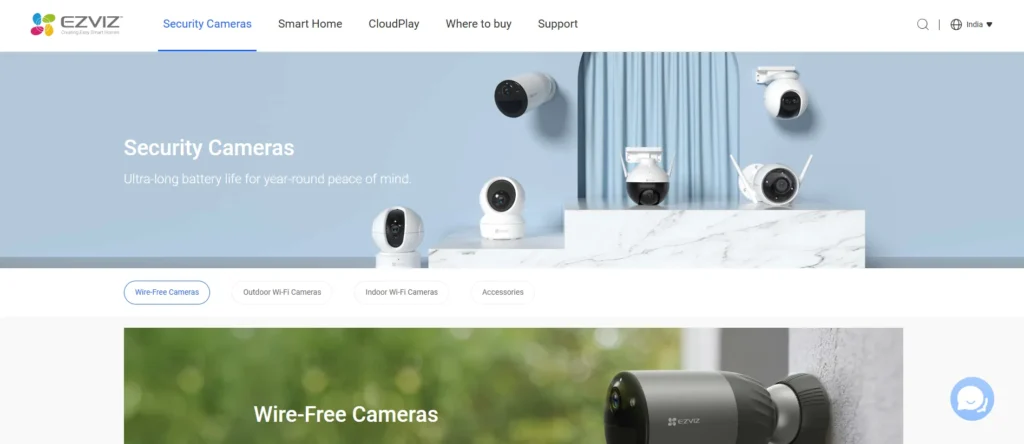
EZVIZ has a strong entry by a company with a high reputation in terms of cameras and surveillance tools of a high quality. Simple Hub and sensor network are the basic parameters of the EZVIZ DIY alarm system, however, the real power of this system is the camera system. It is loaded with high-end capabilities, including such features as 4K resolution, two camera lenses, and AI in the device to detect people and vehicles (commonly without required monthly subscription due to the MicroSD card local storage). It is placed in the hands of a user that desires the best video quality and has full control over their data they record not paying to a cloud service.
Key Features: High quality camera (up to 4K); Free on-board storage with MicroSD cards; Full line up of cameras (PoE, Wi-Fi, Pan/tilt); Superior self-monitoring app to view in real-time.
Pros: Strengths: Wonderful video resolution and clarity as evidence; No charges needed on video storage and other basic features; Simple DIY integration with security items.
Cons: Monitoring is not a common facility, and the compatibility with Smart homestead mainly is restricted to Google/Alexa.
9. Ring Alarm
- Website: https://ring.com/products/alarm-base-station-v2
- Price (Approx.): $199.99
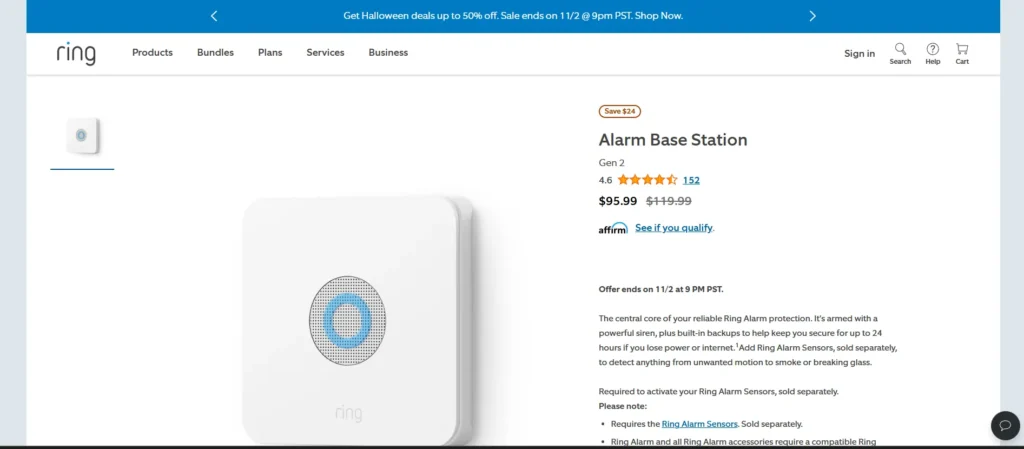
Ring Alarm is an easy, modular, and highly customizable alarm system built to fit seamlessly within the Amazon ecosystem. As a DIY Home Security System, it’s a perfect choice for users who already own Ring Video Doorbells or Cameras and want to expand their setup effortlessly. The system offers a simple installation process and a wide range of affordable accessories. Its monitoring plan is attractively priced, allowing an unlimited number of cameras under a low monthly fee. Ring is the go-to option for homeowners seeking smart integration with Alexa and access to an extensive collection of high-quality video devices.
Key Features: Best video ecosystem integration (Ring/Blink), Wide range of affordable accessories, Simple DIY setup, Excellent low-cost professional monitoring plan.
Pros: Incredibly cheap to monitor unlimited cameras; has a superior video hardware collection; extensive Alexa integration.
Cons: To remotely arm or disarm, one must subscribe to a paid plan; connectivity is not as reliable as of the dedicated cellular connection at SimpliSafe.
Suggested Read: NordVPN Alternatives
10. Lorex Home Center
- Website: https://www.lorex.com/
- Price (Approx.): $399
Whereas the majority of the DIY solutions are fully automated on Wi-Fi, Lorex serves the high-end segment of the population that cannot afford to have the security infrastructure based on the cloud. They normally develop a system around an NVR (Network Video Recorder) which retains terabytes of footage on-site so that they are secure even in the event of internet outages. A lot of their components work using PoE which combines a power source with data transfer over a single Ethernet cable giving out a very stable and reliable connection. This system grants its users complete recording, as much storage as possible and high-resolution video integrity at the expense of an ease of install of peel and stick.
Key Features: Dedicated Local storage NVR (terabytes of storage); PoE (Power on Ethernet) for stable connection and power; True 24 / 7 continuous recording ability; Premium commercial grade for camera hardware.
Pros: Most stable connection/power solution (PoE); complete data control (no cloud needed); no monthly video and storage charges.
Cons: Should be more complicated (needs to run Ethernet cables); Not much focus on building an ecosystem of smart homes.
DIY Home Security System Comparison Table
| System | Equipment Cost (Starter Approx.) | Self-Monitoring (Free Remote Control) | Professional Monitoring (Lowest Price) | Key Feature | Smart Home Integration | Camera Quality Focus |
| 1. SimpliSafe | $250 | No (Requires $9.99/mo for remote) | $21.99/mo | Active Guard Intervention | Alexa, Google | Privacy Shutter |
| 2. Ring Alarm Pro | $199 | No (Requires $4.99/mo for remote) | $20.00/mo | Built-in Eero Wi-Fi 6 Router | Alexa, Google (Deep) | Wide-Angle Video |
| 3. Scout Alarm | $229 | No (Requires a paid plan) | $19.99/mo | Aesthetic Design, High Customization | Z-Wave, Zigbee, IFTTT | Custom Integration |
| 4. ADT Self Setup | $199 | Yes (After 1-month minimum) | $24.99/mo | High-Quality Google Nest Cams | Google Nest (Deep) | AI Detection |
| 5. Cove | $86 | No (Monitoring Mandatory) | $19.99/mo | Most Affordable 24/7 Monitoring | Alexa, Google | Value / Pre-Paired |
| 6. Frontpoint | $99 | No (Monitoring Mandatory) | $44.99/mo | Superior Customer Support / Quality | Z-Wave | Image Verification |
| 7. Wyze | $70 | Yes (Remote Arm/Disarm) | $5.00/mo | Lowest Overall Monthly Cost | Alexa, Google | Budget Video |
| 8. EZVIZ | $99 | Yes (Remote Arm/Disarm) | No Option | Free Local Storage/4K Video Focus | Alexa, Google | High Resolution/Local |
| 9. Ring Alarm | $199 | No (Requires $4.99/mo for remote) | $20.00/mo | Simple, Scalable Amazon Ecosystem | Alexa | Wide-Angle Video |
| 10. Lorex Home Center | $399 | Yes (Remote App View) | No Option | Local NVR Storage/PoE System | Alexa, Google (Limited) | Hardwired Integrity |
Ending Note
Choosing the right home protection has never been easier or more accessible. With advanced sensors, AI-powered cameras, and mobile app integration, today’s security solutions put complete control in your hands. A DIY Home Security System offers flexibility, affordability, and independence—allowing homeowners and renters alike to safeguard their spaces without relying on expensive professional installations.
From smart alerts to seamless smart home compatibility, these systems blend technology and convenience to provide reliable, round-the-clock protection. Whether you want professional monitoring or prefer to manage your own security, DIY options deliver the perfect balance of simplicity and effectiveness. As homes become smarter, so should your security—modern, connected, and completely customizable.
FAQs
1. What Will Be The Distinction Between Self-Monitoring And Professional Monitoring?
Self-Monitoring: You will fit the technology, get all the alerts in your smartphone, and it is your personal duty to make the phone call to the emergency department.
Professional Monitoring: The central station (24/7) is informed of the alarm triggering, the alarm is validated (usually by camera/video verification) and the police/fire services are automatically set in motion, making the response higher priority and much faster.
2. Are DIY Systems Safe To Have A Wi-Fi Connection?
Wi-Fi is required so that it can stream video, remote app control, and updates. But, there is a main center (Base Station) that has a cellular chip and battery backup. The alarm will keep operating and send communications to the monitoring center through the cellular network in case a burglar cuts your power or Wi-Fi.
3. What Does SimpliSafe’s Active Guard Or Intruder Intervention Do?
This is a high-quality feature under which a live professional agent is allowed to temporarily access the camera power as a confirmed alarm triggers a view of the threat and actually directs speech to the intruder via the two-way speaker on the camera to remind them to be on their way and alert police. It is an aggressive intervention that is very effective in preventing crimes.
4. What DIY System Has The Best Results With The Constantly Moving Renters?
The most suitable one is SimpliSafe and Ring Alarm among renters. Most sensors are installed wirelessly and with peel-and-stick adhesive, easily removable, damage the walls, and are easily packed and fitted to an alternate location.
5. Why Is The Professional Monitoring Plan Of Ring Less Expensive Than The One Of SimpliSafe?
The video monitoring plan offered by the Ring is very affordable (starting with $4.99/month) since it is Amazon-subsidized and seeks to stimulate the uptake of the scheme within the Ring/Alexa framework. The premium monitoring offered by SimpliSafe is more costly, as it deals with the human-based intervention, and may require the more expensive cellular costs.