Turkey ranks among the most internet-restrictive countries in the world. Freedom House classifies it as “Not Free,” and hundreds of thousands of websites remain blocked, including social media platforms like X (formerly Twitter), Instagram, Facebook, and TikTok, which get shut down during political events or on the government’s orders. People have even faced legal consequences for posting criticism or certain content online.
If you’re living in or traveling to Turkey, a reliable VPN (Virtual Private Network) is no longer optional, it’s essential. A VPN for Turkey hides your real location, encrypts your internet traffic, and lets you access blocked websites safely. But here’s the catch: Turkey actively blocks many VPN services too, so not every provider will actually work there. This guide breaks down the best VPNs that still work reliably in Turkey, what features to look for, and how to choose the right one for your needs.
Why Do You Need a VPN in Turkey?
Turkey’s internet censorship goes far beyond blocking a few websites. Understanding the full picture helps you appreciate why a VPN matters so much here.
- Widespread website blocking: is the most obvious issue. As of recent reports, over 220,000 URLs are blocked in Turkey. This includes news websites, political opposition pages, LGBTQ+ content, and even platforms like Wikipedia (which was famously blocked from 2017 to 2020). During elections, protests, or politically sensitive moments, the government frequently throttles or shuts down social media entirely.
- Surveillance and legal risk: add another layer of concern. Turkey has imprisoned journalists and regular citizens for social media posts. Without a VPN encrypting your traffic, your internet service provider (ISP), and by extension, the government, can monitor everything you do online.
- Public Wi-Fi vulnerability: is a practical concern for travelers. Airports, hotels, and cafés in Turkey offer free Wi-Fi, but these networks are easy targets for hackers. While a VPN encrypts your connection, pairing it with antivirus software provides an additional layer of protection against malware and other online threats. A VPN creates a secure, encrypted tunnel for your data, keeping passwords, banking information, and personal messages safe from prying eyes.
- Accessing familiar content: matters whether you’re a resident or visitor. Many international streaming services show different content libraries based on your location. A VPN lets you connect to servers in other countries, unlocking the content you’re used to watching back home.
What Features Should You Look for in a Turkey VPN?
Not every VPN can handle Turkey’s aggressive blocking. Here are the features that separate a VPN that works from one that doesn’t.
- Obfuscation technology is the single most important feature. Turkey uses Deep Packet Inspection (DPI) to detect and block VPN traffic. Obfuscation disguises your VPN connection so it looks like normal internet browsing, making it invisible to government firewalls. Without this, your VPN will likely get blocked within minutes of connecting.
- A strict no-logs policy means the VPN provider doesn’t store any record of your online activity. If a government demands user data, there’s simply nothing to hand over. Look for providers that have been independently audited to verify this claim.
- A kill switch is your safety net. If your VPN connection drops unexpectedly — even for a second — the kill switch instantly cuts your internet access so your real IP address and unencrypted data are never exposed.
- Strong encryption (AES-256 is the gold standard) ensures that even if someone intercepts your data, they can’t read it. Combined with modern protocols like WireGuard or proprietary alternatives like NordLynx or Lightway, this keeps you both secure and fast.
- Servers near Turkey (but outside Turkish jurisdiction) give you the best speeds. Look for providers with servers in nearby countries like Greece, Bulgaria, Germany, or Cyprus. Connecting to a Turkish server defeats the purpose since it falls under local jurisdiction.
Comparison Of Top VPNs For Turkey
| VPN | Best For | Price | Devices | Servers | Obfuscation | Money-Back Guarantee |
| NordVPN | Overall best for Turkey | $3.29/month | 10 | 6,800+ in 113 countries | NordWhisper | 30 days |
| ExpressVPN | Ease of use | $3.49/month | 8 (Basic) | 3,000+ in 105 countries | Automatic on all servers | 30 days |
| Surfshark | Budget pick | $1.88/month | Unlimited | 3,200+ in 100 countries | Camouflage Mode | 30 days |
| ProtonVPN | Free option | $2.99/month | 10 | 1,900+ in 91 countries | Stealth protocol | 30 days |
| CyberGhost | Streaming | $1.99/month | 7 | 11,000+ in 100 countries | Limited | 45 days |
| PIA | Customization | $1.49/month | Unlimited | 35,000+ in 91 countries | Shadowsocks | 30 days |
| IPVanish | Beginners | $2.19/month | Unlimited | 2,400+ in 90+ countries | Basic | 30 days |
List Of Best VPNs For Turkey in 2026
Here are seven VPN providers that have been tested and confirmed to work reliably in Turkey, along with their pricing, key features, and drawbacks.
1. NordVPN – Best Overall for Turkey
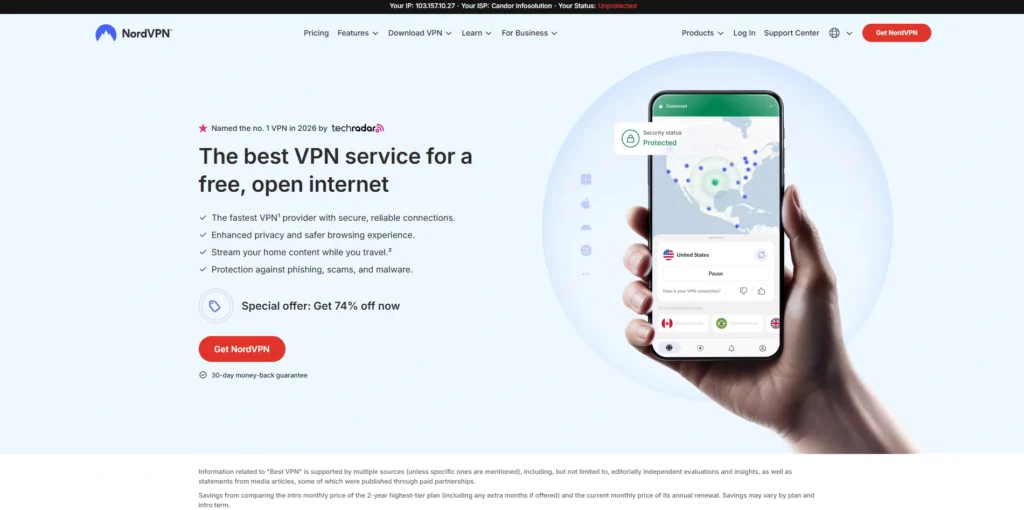
Official Website: nordvpn.com
NordVPN consistently tops recommendation lists for Turkey thanks to its powerful combination of security, speed, and censorship-bypassing tools, making it a top VPN for Turkey. It offers 6,800+ servers across 113 countries, including 14 servers in Turkey for those who need a Turkish IP abroad. Its NordWhisper obfuscation technology is specifically designed to defeat advanced blocking systems like Turkey’s DPI. The audited no-logs policy, RAM-only servers, and Panama-based headquarters make it a privacy powerhouse.
Key Features:
- 9,000+ servers in 130 countries,
- NordLynx protocol,
- Threat Protection Pro (ad and malware blocker),
- Double VPN,
- RAM-only servers,
- 10 simultaneous connections,
- 30-day money-back guarantee
Pros:
- Panama-based headquarters, outside 14-Eyes surveillance alliance
- RAM-only servers mean no data persists after reboot
- Independently audited no-logs policy adds verified credibility
- NordWhisper obfuscation specifically engineered to defeat Turkey’s DPI
Cons:
- Slightly more expensive than budget options on renewal,
- no unlimited device connections
Pricing:
1 Month Plan:
- Basic: $12.69/month
- Plus: $14.99/month
- Complete: $18.29/month
1 Year Plan:
- Basic: $4.89/month
- Plus: $5.39/month
- Complete: $6.89/month
2 Years Plan:
- Complete: $4.99/month
- Basic: $3.09/month
- Plus: $3.59/month
2. ExpressVPN – Best for Ease of Use

Official Website: expressvpn.com
ExpressVPN is the go-to choice if you want something that simply works without any tinkering. Its automatic obfuscation kicks in whenever it detects blocking, no manual setup required. With servers in 105 countries and its proprietary Lightway protocol delivering some of the fastest speeds available, it handles streaming, browsing, and social media effortlessly from Turkey. ExpressVPN has a proven track record in Turkey, having famously refused to hand over user data to Turkish authorities during a criminal investigation.
Key Features:
- Servers in 105 countries,
- Lightway protocol,
- TrustedServer (RAM-only),
- built-in password manager (Keys),
- MediaStreamer for smart TVs,
- up to 14 device connections,
- 30-day money-back guarantee
Pros:
- Automatic obfuscation requires zero manual configuration
- Proven real-world track record, refused to hand over user data to Turkish authorities
- One of the fastest VPNs available due to Lightway protocol
Cons:
- More expensive than most competitors at standard pricing,
- owned by Kape Technologies (which also owns CyberGhost and PIA)
Pricing:
1 Month Plan:
- Basic: $12.99/month
- Advanced: $13.99/month
- Pro: $19.99/month
12 Month Plan:
- Basic: $4.99/month
- Advanced: $5.99/month
- Pro: $8.99/month
2 Years Plan:
- Pro: $7.49/month
- Basic: $3.49/month
- Advanced: $4.49/month
3. Surfshark – Best Budget VPN for Turkey

Official Website: surfshark.com
Surfshark proves you don’t need to spend a fortune to get reliable VPN protection in Turkey. Its standout feature is unlimited simultaneous device connections, one subscription covers your entire household. Camouflage Mode (Surfshark’s obfuscation) hides your VPN usage from Turkish ISPs, while MultiHop routes your traffic through two servers for extra security. The Alternative ID feature creates a completely separate online identity, which is particularly valuable in a surveillance-heavy environment.
Key Features:
- Unlimited devices,
- 4,500+ servers in 100 countries,
- AES-256 encryption,
- CleanWeb ad blocker,
- MultiHop (Double VPN),
- RAM-only servers,
- 30-day money-back guarantee
Pros:
- One subscription covers your entire household with no device cap
- MultiHop routes traffic through two servers for layered security
- Alternative ID feature creates a separate online identity, valuable in surveillance-heavy environments
- Very affordable at $1.88/month on the 2-year plan
Cons:
- Monthly plan is expensive at $15.45,
- slightly smaller server network than NordVPN
1 Month Plan:
- Surfshark Starter: $15.45/month
- Surfshark One: $17.95/month
- Surfshark One+: $20.85/month
12 Months Plan:
- Surfshark Starter: $2.98/month
- Surfshark One: $3.38/month
- Surfshark One+: $6.98/month
24 Months Plan:
- Surfshark One+: $4.18/month
- Surfshark Starter: $1.78/month
- Surfshark One: $2.08/month
4. ProtonVPN – Best Free Option for Turkey

Official Website: protonvpn.com
ProtonVPN stands out as the only reputable VPN offering a genuinely useful free tier, unlimited bandwidth with no data caps. The paid plans unlock the full experience with Secure Core servers (which route traffic through privacy-friendly countries like Switzerland and Iceland before reaching your destination), providing an extra layer of protection. Based in Switzerland with strict privacy laws, ProtonVPN’s open-source apps have been independently audited, and its commitment to transparency is unmatched. During Turkey’s social media crackdowns, ProtonVPN saw a massive surge in new users from the region.
Key Features:
- 19,000+ servers in 130+ countries,
- Secure Core (multi-hop through privacy-friendly countries),
- NetShield ad/malware blocker,
- open-source apps,
- WireGuard support,
- 10 device connections,
- 30-day money-back guarantee
Pros:
- Only reputable VPN with a genuinely useful free tier (unlimited bandwidth, no data caps)
- Based in Switzerland, benefiting from some of the world’s strictest privacy laws
- Open-source apps allow independent community scrutiny
- Saw massive adoption surge during Turkey’s social media crackdowns, proving real-world reliability
Cons:
- Free plan limited to servers in 10 countries with no streaming support,
- prorated refund policy (not a full refund),
- live chat support is not 24/7
Pricing:
1 Month:
- Proton Free: $0.00 /month
- VPN Plus: $9.99 /month
- Proton Unlimited: $12.99 /month
1 Year:
- Proton Free: $0.00 /month
- VPN Plus: $3.99 /month
- Proton Unlimited: $9.99 /month
2 Years:
- Proton Unlimited: $7.99 /month
- Proton Free: $0.00 /month
- VPN Plus: $2.99 /month
5. CyberGhost – Best for Streaming in Turkey

Official Website: cyberghostvpn.com
CyberGhost combines an enormous server network, making it a strong vpn for Streaming with dedicated optimized servers.(11,000+ servers in 100 countries) with servers specifically optimized for streaming and torrenting. Its Smart Rules automation makes it a reliable VPN for Turkey, letting you configure exactly how the VPN behaves on different networks — handy for automatically connecting when you join public Wi-Fi in a Turkish café. The 45-day money-back guarantee is the longest among major providers, giving you extra time to test whether it meets your needs.
Key Features:
- 11,500+ servers in 100 countries,
- streaming-optimised server profiles,
- NoSpy servers,
- Smart Rules automation,
- AES-256 encryption,
- 7 simultaneous connections,
- 45-day money-back guarantee
Pros:
- Smart Rules automation can auto-connect on public Wi-Fi
- Streaming and torrenting optimized server profiles
- 45-day money-back guarantee, longest among major providers
Cons:
- Speeds are not as fast as NordVPN or Surfshark,
- owned by Kape Technologies,
- fewer advanced features than top-tier competitors
Pricing:
- 2 Year + 4 Months: ₹165/mo
- 1 Month: ₹965/month
- 6 Month: ₹560/mo
6. Private Internet Access (PIA) – Best for Customization

Official Website: privateinternetaccess.com
PIA gives tech-savvy users granular control over their VPN experience while remaining accessible enough for beginners. You can customize the app layout, choose between encryption levels, and set up automation rules for different network types. PIA uses Shadowsocks proxy-based obfuscation to bypass Turkish DPI, and its strict no-logs policy has been verified in court multiple times. With unlimited simultaneous connections, it’s an excellent choice for families.
Key Features:
- Unlimited devices,
- servers in 90+ countries,
- open-source apps,
- MACE ad blocker,
- customisable encryption settings,
- split tunnelling,
- dedicated IP option ($2.50/month extra),
- 30-day money-back guarantee
Pros:
- No-logs policy verified in court multiple times, not just audited on paper
- Highly customizable encryption settings for tech-savvy users
- Shadowsocks obfuscation effectively bypasses Turkish DPI
- Dedicated IP option available for an extra $2.50/month
Cons:
- Inconsistent streaming performance on some platforms,
- owned by Kape Technologies,
- interface can feel cluttered for beginners
Pricing:
- 1 Month: ₹900.79/month
- 1 Year: ₹250.83/mo
- 3 Year + 4 Months: ₹146.33/mo
7. IPVanish - Best for Beginners
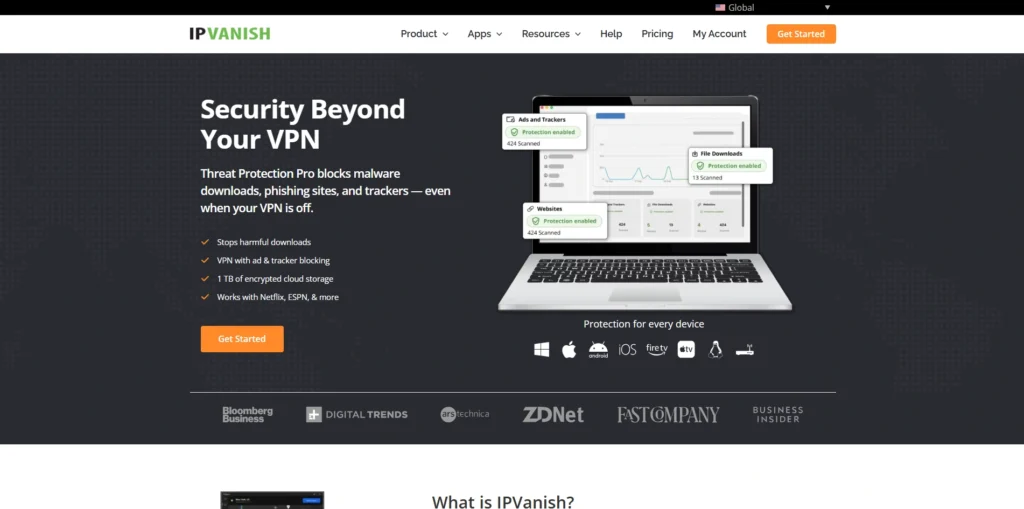
Official Website: http://ipvanish.com
IPVanish offers a straightforward, no-fuss VPN for Turkey experience that’s perfect for people who just want to connect and go. The clean interface makes server selection intuitive, and unlimited simultaneous connections mean you won’t have to worry about device limits. RAM-only servers ensure no data persists after reboot, and the recently published transparency reports reinforce its commitment to a verified no-logs policy. Its 24/7 live chat support is responsive and helpful if you run into any issues while in Turkey.
Key Features:
- Unlimited simultaneous connections,
- 3,200+ servers in 150+ locations,
- WireGuard support,
- Double Hop VPN,
- Vpn split tunneling,
- Threat Protection,
- SOCKS5 proxy
- 30-day money-back guarantee
Pros:
- 24/7 live chat support — responsive and helpful for in-country troubleshooting
- Recently published transparency reports reinforce no-logs commitment
- Clean, intuitive interface ideal for first-time VPN users
Cons:
- Based in the United States (Five Eyes jurisdiction),
- cannot reliably unblock US Netflix and Disney+,
- kill switch has shown inconsistencies in some tests
Price:
Monthly Plan
- Essential:$12.99 /mo
- Advanced:$14.99 /mo
Yearly Plan
- Essential:$3.33 /mo
- Advanced:$4.49 /mo
2-Year Plan
- Essential:$2.19 /mo
- Advanced:$3.29 /mo
How to Use a VPN in Turkey: Quick Setup Guide
Using a VPN in Turkey is fairly straightforward, but there are a few important details that can save you time and frustration—especially because some VPN websites and services may be restricted inside the country.
1. Choose a Reliable VPN
Start by selecting a trustworthy VPN provider. Look for
- Strong encryption (AES-256)
- No-logs policy
- Fast servers (preferably near Turkey or in Europe)
- Obfuscation or “stealth” mode (helps bypass VPN blocks)
Popular options typically include NordVPN, ExpressVPN, and Surfshark.
2. Download Before You Arrive
This step matters more than most people realize.
Turkey sometimes blocks VPN provider websites
- Install the VPN app on all your devices before entering Turkey
- Also download backup apps or browser extensions if possible
If you’re already in Turkey, you may need to use mirror sites or alternative app stores.
3. Install and Set Up the VPN
Once downloaded
- Open the app and sign in
- Allow necessary permissions (network access, etc.)
- Enable auto-connect if available
Most VPN apps are beginner-friendly and take only a few minutes to set up.
4. Connect to a Server
To use the VPN
- Open the app
- Choose a server location (e.g., Germany, Netherlands, UK)
- Click Connect
If you want Turkish content from abroad, connect to a Turkey server.
If you want unrestricted global access inside Turkey, connect to a non-Turkey server.
5. Turn On Advanced Features (Important in Turkey)
For better reliability
- Enable Obfuscated Servers / Stealth Mode
- Use WireGuard protocol (or equivalent) for faster speeds
- Turn on Kill Switch to prevent data leaks
These features help maintain access even if restrictions tighten.
6. Test Your Connection
After connecting:
- Visit a site like whatismyip to confirm your IP has changed
- Try accessing blocked or restricted content
If something doesn’t work: - Switch servers
- Change protocol
- Restart the app
7. Use It Safely and Consistently
- Connect your VPN before browsing sensitive content
- Avoid free VPNs (they’re often slow, insecure, or blocked)
- Keep the app updated for best performance
Conclusion
Turkey’s internet restrictions are among the strictest outside of China, and they continue to expand. A good VPN for Turkey is the most effective way to protect your privacy, access blocked content, and browse freely — whether you’re a resident or a traveler. NordVPN leads the pack with its advanced obfuscation and all-around performance. Surfshark is the best value pick if budget matters. ExpressVPN wins on simplicity. And ProtonVPN offers a solid free tier for those not ready to commit financially. Whichever you choose, make sure to install it before arriving in Turkey, enable obfuscation, and keep that kill switch on.
Frequently Asked Questions (FAQs)
1. Are VPNs Legal In Turkey?
VPNs themselves are not illegal in Turkey. However, the government actively blocks access to many VPN services and their websites. While using a VPN is generally tolerated, using one to engage in activities that are already illegal under Turkish law could lead to legal consequences. Always use a VPN responsibly.
2. Can I Use A Free VPN In Turkey?
Most free VPNs do not work in Turkey because they lack the obfuscation technology needed to bypass DPI. They also tend to have slow speeds, strict data caps, and questionable privacy practices — some even sell your browsing data. ProtonVPN’s free tier is the notable exception, offering unlimited bandwidth with no data caps, though it’s limited in server locations and device count.
3. Which VPN Is The Fastest For Use In Turkey?
NordVPN and Surfshark consistently rank among the fastest VPNs thanks to their WireGuard-based protocols (NordLynx and WireGuard respectively). ExpressVPN’s Lightway protocol also delivers excellent speeds. For the best experience, connect to a nearby server in a country like Greece or Bulgaria rather than a distant one.
4. Will A VPN Slow Down My Internet In Turkey?
Every VPN introduces some speed reduction due to encryption and the extra distance your data travels. With a premium provider and a nearby server, this drop is typically 10–20% — barely noticeable for browsing, streaming, or video calls. Free or low-quality VPNs can reduce speeds by 50% or more.
5. Can I Access Turkish Streaming Services From Abroad Using A VPN?
Yes. If you’re traveling outside Turkey and want to access platforms like BluTV, Exxen, or Tivibu GO, connect to a VPN server located in Turkey. Providers like NordVPN (14 Turkish servers), Surfshark (8 Turkish servers), and ExpressVPN all offer Turkish server locations for this purpose.
6. What Should I Do If My VPN Stops Working In Turkey?
First, try switching to a different server or protocol within your VPN app. If that doesn’t work, enable obfuscation mode (sometimes labeled “stealth” or “camouflage”). You can also try connecting via the Tor browser or contacting your VPN provider’s customer support for Turkey-specific troubleshooting. Having a backup VPN installed is also a smart precaution.
7. Should I Connect To A VPN Server Inside Turkey?
It depends on your goal. If you’re abroad and want to access Turkish content, then yes — connect to a Turkish server. But if you’re inside Turkey and trying to protect your privacy or bypass censorship, connect to a server outside Turkey (like Greece, Germany, or Bulgaria). Turkish servers fall under local jurisdiction, which could compromise the privacy benefits of using a VPN.